
2025 Annual Report
JUMP TO:
Message from the CEO
In 2025, Global Fishing Watch made excellent progress toward our ambitious 2030 strategy, fueled by advances in technology, expansion of our user base and innovative tools, and growing global recognition that open data is the foundation of fair and equitable ocean governance.
Our technical ambition — to map 100 percent of the global industrial fishing fleet — is now a reality. By integrating new optical satellite imagery, we nearly tripled the number of vessels we can detect. We also successfully processed a full year of high-resolution optical imagery of global coastal waters, provided by our partner Planet. Set for a public release in 2026, this imagery offers an unprecedented look into nearshore waters — the most biodiverse and heavily used parts of the ocean where the majority of the world’s more than two million small-scale vessels operate.
Of course, data alone is not enough. The true measure of our success lies in governments’ adoption of transparency for the stewardship of our ocean. This year, we conducted trainings that reached more than 800 participants from 70 countries, ensuring our tools are used effectively and responsibly. Our government partners increasingly rely on our platform to oversee their waters — we are now supporting monitoring and patrols across a record 73 million square kilometers worldwide and directly contributing to the prevention of illegal fishing and the strengthening of fisheries management.
Our work to advance the global 30×30 target also gained momentum. Working with National Geographic Pristine Seas, we monitored two newly designated marine protected areas in the Marshall Islands, observing that fishing activity has almost completely stopped. From supporting new protected areas in the Canary Islands and Portugal to informing the establishment of a fisheries restricted area in the Otrantro Channel — one of the largest no-take zones in the Mediterranean — our data-driven insights are turning commitments into measurable protection.
Our influence was equally evident at the U.N. Ocean Conference, where the closing Action Plan formally recognized the role of transparency and technology in ending illegal, unreported and unregulated fishing.
Our data also powered groundbreaking research published in Science and supported high-impact investigative journalism in the Financial Times, Bloomberg and Reuters.
Looking ahead, we stand ready to contribute to new areas — from supporting the implementation of the High Seas Treaty to improving oversight of mineral exploration through the launch of our Deep-Sea Mining Watch portal. Together with our partners, we will continue delivering practical solutions and powerful innovation that make a real difference for the ocean and the communities that depend on it.


Tony Long
CEO, Global Fishing Watch
Our Impact
Charting a new era of ocean governance and accountability
Over the past year, Global Fishing Watch has made bold strides in advancing transparency as the foundation of equitable ocean governance. We’ve sharpened our open-source tools, deepened partnerships with governments and multilateral organizations and delivered innovative research that is reshaping the conversation on ocean management. At its core, our work is driving policy change and rallying action for a healthier, more sustainable ocean for all.
Here’s a look at what we’ve accomplished.

In 2025, our collaborative efforts supported the active monitoring of over 73 million square kilometers — an area covering roughly one-third of all national waters. We achieved a significant milestone by supporting a third consecutive year of regional patrols led by the Pacific Islands Forum Fisheries Agency in the Western Pacific, alongside large-scale operations with the Canadian Department of Fisheries and Oceans and the Indian Ocean Commission. We also supported national patrols in Chile, Ecuador, Gabon, Papua New Guinea, Peru and Senegal. By the end of the year, our analysts had completed over 40,000 vessel reviews, directly contributing to more than 400 sanctions or penalties against vessels engaged in illegal activity. This transition from “data on a map” to “change on the water” demonstrates how transparency is delivering tangible impacts in the way our ocean is managed.

Global Fishing Watch teamed up with the Organisation for Economic Co-operation and Development (OECD), Canada and the United Kingdom to help drive transparency around ultimate beneficial ownership in fisheries, resulting in the OECD’s adoption of a new recommendation aimed at eliminating government support for illegal, unreported and unregulated (IUU) fishing. The recommendation explicitly acknowledges the urgent need to improve ownership transparency across the maritime sector and calls on nations to ensure that public funding does not inadvertently subsidize illicit operations. By aligning global financial standards with vessel data, we are helping close the loopholes that allow IUU fishing to remain profitable.

Our analysis played a pivotal role in the establishment of a new temporal fisheries restricted area (FRA) in the Adriatic Sea and paved the way toward rebuilding depleted stocks of Norway lobster (Nephrops norvegicus). Unveiled at the 48th session of the General Fisheries Commission for the Mediterranean in Malaga, Spain, this achievement resulted from a collaborative effort between Albania, the EU, Italy and Montenegro, alongside Global Fishing Watch and national scientific institutes. By mapping the specific distribution of the species and analyzing fishing patterns, we provided the evidence needed to delineate the new FRA and extend closure periods in existing zones.
At the U.N. Ocean Conference, Global Fishing Watch’s energetic advocacy efforts achieved a significant win: the inclusion of explicit language calling for enhanced transparency in the conference’s formal outcome document. Meanwhile, on the ground, our team solidified critical regional partnerships, working closely with Panama as it reaffirmed its commitment to publishing ultimate beneficial ownership data — a move they challenged other flag States to match. The impact of our data-driven insights was further validated by the announcement of massive new ocean protections, from the world’s largest MPA in French Polynesia to Portugal’s new 100,000 square kilometer Gorringe Ridge MPA, to which our analysis contributed foundational data.
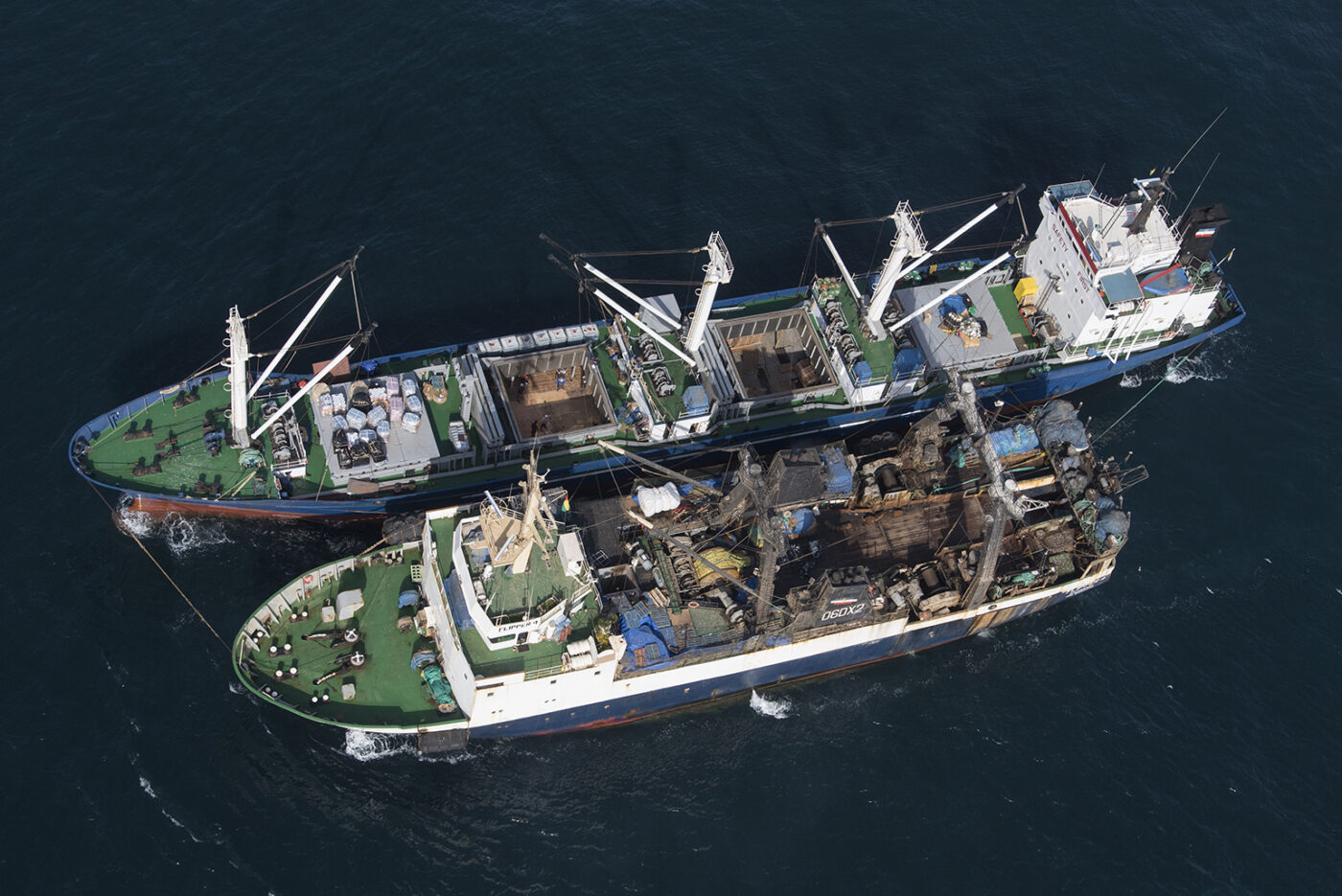
Through our ongoing partnership, Panama — one of the world’s largest maritime registries — has taken a historic step in the fight against illegal fishing. This year, the government announced a new requirement for all Panamanian-flagged vessels to disclose their ultimate beneficial owner, a move that significantly increases global transparency. To further bolster oversight, Panama also adopted a new procedure for monitoring at-sea transshipment using Global Fishing Watch’s platform and finalized a national control and inspection plan to prioritize high-risk fisheries. In addition, we launched a new partnership with the Ministry of the Environment to strengthen monitoring of the country’s vast marine protected areas.

We formalized a strategic scientific partnership agreement with the Instituto del Mar del Perú (IMARPE), one of the world’s leading marine research institutions. The agreement establishes a framework for collaboration focused on the development of advanced methodologies to analyze vessel tracking data and the integration of these insights into national fisheries management. Through joint studies, co-authored scientific publications and specialized training sessions, we are working alongside IMARPE to enhance Peru’s capacity for ocean monitoring. By combining our global data expertise with IMARPE’s renowned research capabilities, we are helping secure a more transparent and sustainable future for one of the planet’s most productive marine ecosystems.

In a major milestone for community-led conservation, our collaboration with Chile’s National Fisheries and Aquaculture Service (SERNAPESCA) resulted in a September resolution authorizing citizen surveillance of the Juan Fernández Islands’ marine protected areas. This groundbreaking protocol empowers local communities to use Global Fishing Watch technology to monitor vessel activity and file formal complaints, significantly extending the reach of government oversight. Meanwhile, our vessel tracking analysis is driving measurable improvements in the Patagonian toothfish fishery. After identifying 43 vessels potentially fishing before the 2024 season officially opened — leading to 21 fines issued by SERNAPESCA — our follow-up analyses revealed a marked behavioral shift, with all monitored vessels appearing to comply with the established closures.

As a result of our expanding monitoring capabilities, a new analysis has mapped and estimated the carbon emissions of large industrial vessels for the first time. Conducted in partnership with University of California Santa Barbara’s Environmental Markets Lab (emLab) and Climate TRACE, the analysis revealed that industrial vessels emitted around 1.3 billion tons of CO2 in 2023, or about 3 percent of global fossil fuel emissions. As ocean-based emissions have surged by 20 percent since 2016, this pilot study provides a vital baseline for understanding the climate impact of maritime activity. By shining a light on these previously hidden figures, we are providing the data and knowledge to help ensure a more sustainable future for our high seas.

In June, we formalized a partnership with the government of Gabon to strengthen ocean governance and responsible stewardship in the country’s fisheries sector. The agreement lays the groundwork for Gabonese fisheries authorities and Global Fishing Watch to improve monitoring, control and surveillance of the central African country’s vast marine resources through enhanced data sharing. The collaboration, designed around the integration of satellite technology and data analytics, is specifically designed to combat illegal fishing and provide the intelligence necessary to clamp down on intrusions by foreign vessels. Our analysis has already proven its operational value, helping support patrols in conjunction with Sea Shepherd within Gabon’s sovereign waters.

In February, we reinforced our partnership with Brazil, establishing a comprehensive work plan aimed at combating illegal fishing, enhancing national transparency and improving monitoring and control of fishing activities. We also strengthened our ongoing work with the Ministry of the Environment and Climate Change, where we are supporting marine spatial planning and providing data and analysis for proposed marine protected areas. To bolster enforcement, we demonstrated the power of our platform to more than 50 members of the Brazilian Federal Police, integrating our monitoring tools into their new initiative to protect Brazil’s exclusive economic zone. As we look ahead, Brazil is a key partner in co-developing our innovative interoperability tool — an automated system designed to seamlessly share vessel identity data between national registries, regional bodies and the U.N. Food and Agriculture Organization’s Global Record.

In July, we integrated Sentinel-2 optical imagery to our platform, effectively tripling our vessel detection capabilities. This higher-resolution imagery allows us to see boats and offshore infrastructure that were invisible to the satellite radar imagery we used previously. This advancement is particularly transformative for coastal and nearshore waters, where fishing activity is greatest but for which vessel tracking coverage has traditionally been limited. Every detection now includes an image thumbnail — a small cutout from the satellite scene that allows users to see the vessel directly in the original satellite imagery, making it easier for researchers, governments, NGOs and other users to validate what they’re seeing.

In early 2025, our technical expertise became a cornerstone of Panama’s intensified efforts to protect the Coiba Ridge marine protected area. Following the Panamanian coast guard’s interception of suspicious vessels, we provided critical analysis of vessel monitoring data to support formal investigations led by the country’s fishing and environmental authorities. These detailed reports served as primary evidence in enforcement proceedings, demonstrating the power of data in the prosecutions. We also supported the Ministry of Environment through our collaboration with the Joint Analytical Cell, resulting in the investigation of 14 longline vessels for potential violations, leading to fines totaling thousands of dollars. Looking ahead, we are proud to support Panama’s new technology-based monitoring, control and surveillance coordination center, which will further unify interagency efforts to safeguard the country’s diverse marine ecosystems.
In December, the Benioff Ocean Science Laboratory launched Deep-Sea Mining Watch — an upgraded open-access portal powered by Global Fishing Watch technology and designed to bring unprecedented transparency to the nascent deep-sea mining industry. Leveraging vessel tracking data to monitor and visualize deep-sea mineral-related vessel activity across the ocean, Deep-Sea Mining Watch shines a light on vessels engaged in emerging mineral exploration in the depths of the ocean and promotes transparency and accountability to help assess the industry’s potential impacts on fisheries and the marine environment. The portal was unveiled at an exclusive live media briefing, securing high-profile coverage from leading media outlets and amplifying our mission to a worldwide audience.

Research published in the journal Science utilized Global Fishing Watch data to provide an unprecedented look at fishing activity within marine protected areas, or MPAs, including the behavior of “dark” vessels – vessels that do not appear in public monitoring systems. The findings offer a dual perspective on marine conservation: while fishing is largely absent from strictly managed “no-take” MPAs — signaling that enforcement is highly effective in these zones — the research also revealed that fishing intensity is actually higher inside many multi-use MPAs than in surrounding coastal waters. As the global community pushes to expand MPA coverage, these insights underscore the vital role our monitoring tools play in moving beyond “paper parks” to ensure robust compliance and genuine protection for our most vulnerable marine ecosystems.

In response to user feedback, we significantly enhanced our Vessel Viewer tool — developed in partnership with TMT — to better support how authorities conduct due diligence, carry out operational planning and help assess potential illegal, unreported and unregulated (IUU) fishing. Our new vessel insight reports now provide a comprehensive deep dive into specific vessel identities and histories, enabling managers to cross-reference activity against regional IUU vessel lists, identify suspicious tracking gaps and determine whether a vessel was detected fishing in a restricted area or in a jurisdiction where it has no known authorization. Perhaps most transformative is the new automated group analysis feature, which allows users to monitor up to 1,000 vessels simultaneously, streamlining fleet-wide monitoring.

In September, we marked a major milestone in our commitment to strengthening ocean research and innovation by selecting the inaugural cohort of our open ocean research small grants program. Eleven grantees from five continents were chosen from nearly 200 applications worldwide to receive funding from Global Fishing Watch to address urgent maritime challenges. These diverse projects range from identifying albatross bycatch hotspots in Mexican fisheries to empowering Kenyan communities to intercept illegal fishing activities. Through these grants, Global Fishing Watch is not only fueling cutting-edge, actionable research but also expanding a global network of partners dedicated to maximizing the impact of transparency in fisheries management and marine sustainability.
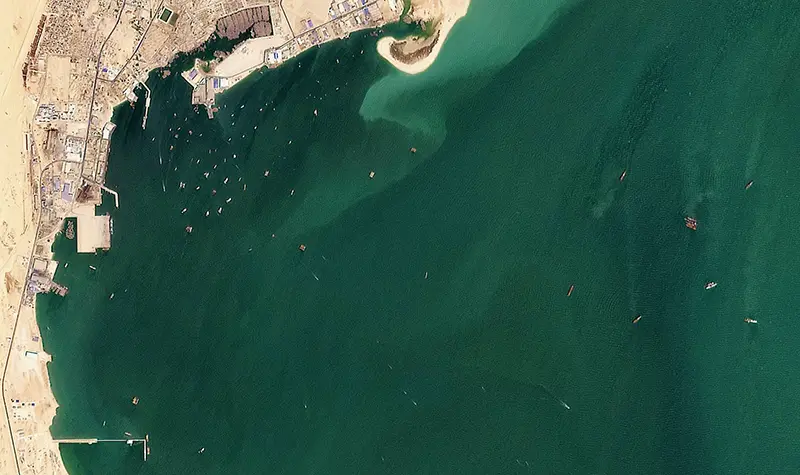
Following a successful pilot project, we entered into an agreement with Planet Labs to integrate their higher-resolution satellite imagery into our monitoring platform. This partnership grants us access to daily imagery covering 2 million square kilometers — only a small fraction of the ocean, but enough to capture the coastal waters where most human activity is concentrated. With this new capability, we can now zoom in and detect fishing vessels as small as 5 meters in length — a transformative leap beyond what we could see before — even with Sentinel-2 imagery. These new insights reveal previously hidden activities like bottom-trawling plumes, aquaculture pens, vessel encounters and even carbon emissions estimates, offering a more complete view of human activity at sea.

In May, we delivered media trainings at the London bureaus of the Financial Times and Bloomberg, introducing journalists to our tools and analytical methods to support their investigative reporting. The sessions strengthened relationships with both outlets and fueled two long-lead stories resulting in the publication of the Financial Times’ The Dark Truth Behind Supermarket Tuna and Bloomberg’s After Gold and Diamonds, Russia Turns to Africa’s Trove of Fish. We also delivered a global virtual training to Mongabay in June, introducing more than 30 reporters based around the world to the tools and functionalities of the Global Fishing Watch map.
Powered by cutting-edge technology and the principle of transparency, Global Fishing Watch is driving definitive action across the world’s ocean. Our success stories from the past year highlight the tangible results of combining innovation with strategic partnerships. From the Adriatic Sea, where our analysis helped expand protections to safeguard Norway lobster populations, to Panama, where our data supported historic enforcement proceedings in the Coiba Ridge, these stories demonstrate a global shift toward accountability. By empowering governments, local communities and researchers with open data, we are closing the net on illegal activity and ensuring that transparency becomes the foundational standard for sustainable ocean governance.



Global Fishing Watch in Action
Driving impact from coast to coast
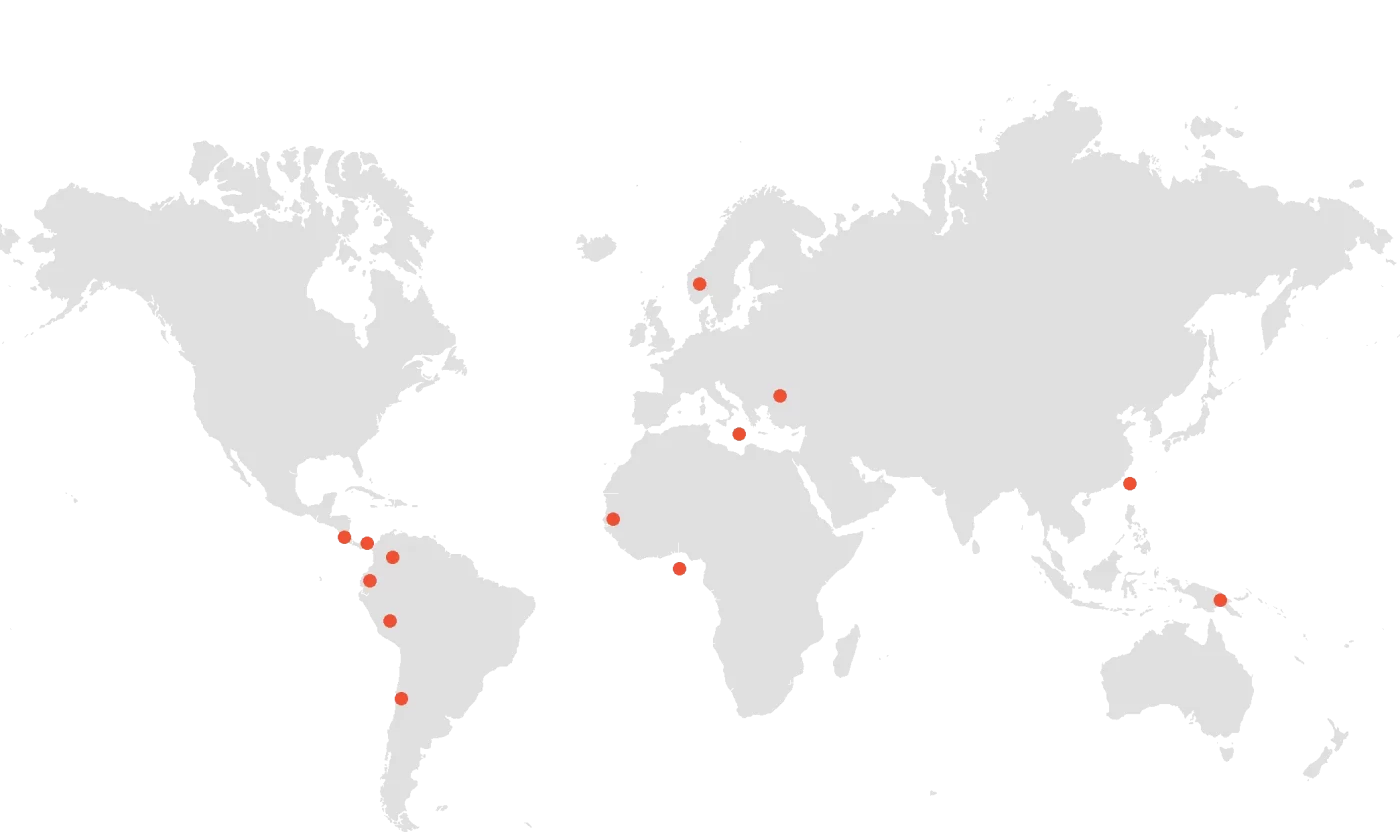
At Global Fishing Watch, our international team transforms ocean data into real-world impact, working across borders and time zones to drive transparency and change. From international summits and government engagements to hands-on technical workshops, our analysts, engineers and policy advocates work relentlessly to bridge the gap between information and action.
Here’s what we achieved in 2025.

Our Ocean Conference
Busan, South Korea
At the Our Ocean Conference, we elevated the global dialogue on transparency and highlighted tech-driven solutions for sustainable fishing. CEO Tony Long moderated a high-level plenary session featuring leadership from the European Commission, the Republic of Korea and Ghana, while our experts partnered with SkyTruth and Oceana to advance strategies for marine area protection. We utilized this global stage to advocate in the press for the indispensable role of vessel tracking in achieving the “30×30” conservation targets. This momentum was amplified by the national broadcast of our PBS documentary, Tracking the Tide, which reached over 3 million households across the United States — bringing the mission of maritime transparency to a mainstream audience and reinforcing the urgency of monitoring our global commons.

Technology training
Albania
In April, a new fisheries restricted area in the Otranto Channel — a major milestone that was supported by our data and analysis — entered into force. To ensure the long-term success of this protected area between Albania and Italy, we are working with authorities on future monitoring activities. In October, we delivered specialized training for the Department of Fisheries and the Fisheries Monitoring Centre on how to integrate Global Fishing Watch tools into their daily monitoring, control and surveillance operations. By leveraging technology and transparency, Albania is not only strengthening its ability to implement regional management measures but also advancing its alignment with EU maritime standards, which could significantly support its EU accession process.

Advancing port controls and marine protection
Chile
In collaboration with the National Fisheries and Aquaculture Service of Chile, our team conducted a series of regional workshops focused on strengthening port monitoring and transparency in fisheries. The final session in Valparaíso brought together the Chilean Navy and customs service, highlighting the critical role of interagency collaboration in securing the fisheries supply chain. Our experts also provided hands-on training for government officials on the marine manager portal — co-founded by Dona Bertarelli — demonstrating how it can be used to help manage the protected areas that make up more than 40 percent of Chile’s waters.

Empowering fisheries management
Brazil
Throughout 2025, we led a series of strategic workshops in Brazil to bolster the nation’s fisheries management and conservation efforts. In April, we collaborated with the Ministry of Fisheries and Aquaculture to enhance monitoring and surveillance capabilities. This was followed by intensive October sessions where we had fruitful discussions on critical governance issues like ultimate beneficial ownership and vessel tracking. Our in-country experts also met with officials from the country’s biodiversity agencies, delivering specialized training on the marine manager portal — co-founded by Dona Bertarelli — outlining how open data can support marine planning, management and enforcement.

Empowering governance and port controls in Peru
Lima, Peru
In Lima, more than 40 government officials — including representatives from the Ministry of Production, national parks service, coast guard and marine research institute — attended an intensive two-day workshop focused on leveraging data and technology to strengthen port controls and enhance the management of the country’s marine protected areas. Participants engaged in hands-on training sessions with Marine Manager — an innovative technology portal co-founded by Dona Bertarelli — learning how to synthesize vessel activity with environmental data to support biodiversity protection and implement robust, data-driven governance across Peru’s coastal and offshore waters.

Supporting science-based policy management in the Mediterranean
Italy
In 2025, Global Fishing Watch presented new analysis on fishing activity around vulnerable marine ecosystems across all General Fisheries Commission for the Mediterranean (GFCM) subregional committees. Together with partners Pew Bertarelli Ocean Legacy, World Wildlife Fund for Nature, and the University of Bari, we identified highly vulnerable deep-sea habitats with minimal recorded fishing activity, highlighting areas where protection could be achieved with low disruption to fisheries. This work was reflected in official committee outcomes and helped catalyze the creation of a new GFCM working group on vulnerable marine species, positioning the analysis to inform future regional management decisions. With our tools and analysis cited across other scientific presentations, Global Fishing Watch is becoming a cornerstone of the data-driven dialogue for the management of Mediterranean waters.

A regional exchange to protect the Eastern Tropical Pacific
Panama City, Panama
Led by Fundación Pacífico, and together with our partners from the Joint Analytical Cell, OceanMind and WildAid, we joined authorities and legal experts from Colombia, Costa Rica, Ecuador and Panama for a high-level regional exchange focused on strengthening cooperation in the Eastern Tropical Pacific Marine Corridor, or CMAR. While the region has made progress in tackling illegal, unreported and unregulated fishing, challenges remain — from handling evidence to coordinating across institutions and borders. By analyzing real-world cases and testing practical solutions, our staff helped participants harness the right tools, technology and collective strength to protect marine biodiversity and the coastal communities that depend on it. The exchange is a core component of our ongoing work to support and empower CMAR nations to strengthen monitoring, control and surveillance across these rich waters.

Enhancing maritime domain awareness and patrol support
Gabon
Following a national agreement signed with Gabon in June, our team launched a comprehensive training for officials from key national agencies aimed at strengthening the blue economy. The initiative culminated in a high-level ceremony with Laurence Ndong, Minister of the Sea for Fisheries and the Blue Economy, providing closing remarks that endorsed recommendations to update Gabonese vessel flags, regulate the use of vessel tracking and create an interagency team for data sharing. Our staff provided hands-on exercises for fisheries officers and developed a customized digital workspace to support a two-week patrol supported by Sea Shepherd. This real-world application of our technology proved immediate results: during the mission, officials successfully identified and issued a warning to a vessel failing to transmit required vessel tracking data, demonstrating the power of data-driven enforcement.

From intelligence to action
Madagascar
In Madagascar, Global Fishing Watch is translating data into enforcement as part of the Joint Analytical Cell and through a partnership with the U.K. Marine Management Organisation. By providing technical training to the Centre de Surveillance des Pêches, analysts are transforming raw data into actionable intelligence used for pre-patrol briefings in support of national and regional missions. This collaboration allows authorities to plan efficient patrol routes and make real-time decisions to target high-risk areas. A recent four-day consultation in Antananarivo further strengthened these efforts, bringing together 24 participants from government and civil society to advance vessel tracking and the detection of “dark” vessels to secure Madagascar’s waters against industrial-scale illicit activity.

Cementing regional partnerships in Guinea
Guinea
In April, as part of our work with TMT, we were invited to participate in an interagency workshop in Conakry that brought together more than 30 participants from 12 Guinean agencies. Co-organized by GRID-Arendal, PRCM — a regional partnership dedicated to coastal and marine conservation in West Africa — and the Ministry of Fisheries and Maritime Economy, we used the opportunity to demonstrate how our tools can support implementing the Port State Measures Agreement to combat illegal fishing. Beyond technical training, the event served as a catalyst for high-level diplomatic progress. Our team utilized the forum to revisit our memorandum of understanding with the ministry — and following a successful high-level meeting, the Minister issued formal instructions to finalize and sign the agreement, a milestone that paves the way for deeper collaboration and enhanced maritime transparency across Guinea’s waters.

On the ground in West Africa
Senegal
In Senegal, we held a groundbreaking workshop focused on transparency in small-scale fisheries. Conducted in the local language, Wolof, the event brought together fishers, community leaders and artisanal fishing associations to explore how open data can safeguard their livelihoods against destructive and illegal fishing. Participants expressed overwhelming support for leading transparency advocacy efforts, marking a historic shift in how these communities are included in governance discussions. Simultaneously, we advanced regional security in Dar es Salaam. Alongside our Joint Analytical Cell partners, we hosted authorities from Comoros, Kenya, Madagascar and Tanzania to advance regional cooperation on patrol planning, data use and institutional coordination.
2025 Achievements
We conducted a series of trainings for over 800 people across 70 countries.
Our analysts supported 20 countries in monitoring a total of 3.47M square kilometers of OECMs and protected waters.
We reviewed over 38k vessels, including foreign-flagged vessels, entering 15 ports.
We supported 19 patrols at sea.
Our website welcomed 765k unique visitors with an overall engagement rate of 71%.
We tracked about 500k vessels on our map using a combination of automatic identification system and vessel monitoring system data.

Advancing marine science and training
Kenya
At the 13th Western Indian Ocean Marine Science Association symposium in Mombasa — the regions’s largest scientific gathering — we joined regional partners to show how transparency and science are powering change in the region. We led a specialized training session for 27 diverse participants, including government officials, journalists and students, bridging the gap between high-level science and practical application. Through hands-on activities and deep-dive discussions, our staff illustrated how transparency can empower a new generation of ocean stewards. By engaging with a broad spectrum of stakeholders on the use of open data and satellite tracking, we strengthened the scientific foundation for solutions that help address marine and coastal issues across the Western Indian Ocean region.

Empowering marine managers at ASEAN Centre for Biodiversity
Southeast Asia
To safeguard biodiversity in one of the world’s most critical marine regions, we are supporting the ASEAN Centre for Biodiversity’s five-year ENMAPS project. In September, our team led hands-on workshops in Indonesia, the Philippines and Thailand, training local teams to leverage our Marine Manager, an innovative technology portal co-founded by Dona Bertarelli. By learning to develop site profiles and integrate data layers, participants are now equipped to visualize and analyze industrial activity within their marine protected areas. This collaboration is building the technical capacity and regional knowledge sharing essential for effective conservation planning, monitoring and evaluation across Southeast Asia’s large marine ecosystems.
Partnering with Pristine Seas in the Pacific
Pacific
In collaboration with National Geographic’s Pristine Seas, we are supporting the monitoring and management of marine protected areas (MPAs) across two countries in the Pacific – the Marshall Islands and the Solomon Islands. By analyzing fishing vessel activity within and adjacent to a proposed MPA and one that has been recently established, we are delivering the data needed for evidence-based management. In the Marshall Islands, baseline and subsequent biannual analyses demonstrated that apparent fishing effort declined substantially in the first year following the January 2025 designation of the Bikar and Bokak National Marine Sanctuary. We also completed a baseline report on apparent fishing effort for the proposed Temotu Province MPA in the Solomon Islands.


Advancing science-based management
Morocco
In September, we conducted a three-day visit to Morocco to meet with an EU delegation, the Ministry of Environment, the National Institute for Fisheries Research and local NGO Association Champions Fnideq. With Morocco’s commitment to achieving 30×30, discussions were held on implementing new fisheries restricted areas and improving management of existing marine protected areas. These discussions represent a vital step toward using transparent data for sustainable ocean governance in the region.

Strategic collaboration
Montenegro
As part of our deepening collaboration with Montenegro, we delivered specialized training on monitoring, control and surveillance for officials from the Department of Fisheries. In Podgorica, representatives from the Ministry of Agriculture and Rural Development engaged in hands-on exercises, exploring how our technology can help the country comply with the EU’s Common Fisheries Policy — a critical step in its EU accession process. Collaboratively, we identified priority areas for future cooperation, including the monitoring of national marine protected areas and providing the data necessary to support the designation of the proposed Budva River fisheries restricted area.

One Ocean Science Congress
Nice, France
Our chief scientist, David Kroodsma, participated in the One Ocean Science Congress, where more than 2,000 scientists gathered to generate insights and recommendations ahead of the U.N. Ocean Conference. David presented new insights on the rise of public vessel tracking and its implications for global ocean governance.
Chile’s commitment to fisheries transparency has reshaped how ocean governance is implemented in practice. Our partnership with the Chilean government resulted in the integration of vessel tracking data across its monitoring, compliance and public accountability systems. By making fishing activity publicly visible — and accessible — this South American powerhouse strengthened enforcement, increased trust across different stakeholders and reinforced science-based management decisions. This collaborative model demonstrates how transparency, when paired with institutional leadership, can improve governance, empower coastal communities and safeguard marine resources. Chile now stands as a global benchmark for how open data and technology can advance sustainable fisheries and long-term ocean stewardship.
Science-based decisions, open data and modern technology are the foundation of fisheries management in Chile, shaping the country’s approach to a transparent, accountable and sustainable fishing sector.
Straight from the fishers’ perspective, see how vessel tracking evolved from skepticism to a widely adopted tool that supports safety, compliance and long-term sustainability.
A recovery story about jack mackerel demonstrates how transparent data, science-based quotas and regional policy collaboration enabled the rebound of Chile’s most important fishery.
Chile’s industrial fishing fleet is tracked and controlled minute-by-minute using satellite systems, onboard cameras and scientific observers, ensuring every vessel’s movement, catch and quota compliance is recorded within a transparent monitoring system.
Science-based decisions, open data and modern technology are the foundation of fisheries management in Chile, shaping the country’s approach to a transparent, accountable and sustainable fishing sector.

Championing transparency in the South Pacific
Chile
In February, we took part in the annual meeting of the South Pacific Regional Fisheries Management Organisation in Santiago, Chile to advocate for open data. Co-hosting a side event with the Fisheries Transparency Initiative and Chile’s Undersecretariat for Fisheries and Aquaculture, we brought together leaders from Chile, Peru and Ecuador. The discussion centered on how open access to vessel data, ownership information and compliance records serves as a deterrent to illegal fishing. By promoting these transparency standards, we are helping regional partners strengthen accountability and ensure more informed, sustainable decision-making across the South Pacific’s high seas.

Strengthening port controls through transparency
Ecuador
At the Fifth Meeting of the Parties to the Port State Measures Agreement, we co-hosted a side event with the Fisheries Transparency Initiative to tackle the opacity of vessel ownership. With support from the government of Ecuador, the event brought together representatives from 24 countries to discuss the critical need for disclosing ultimate beneficial ownership. By advocating for higher transparency standards, we demonstrated how identifying the real individuals behind fishing fleets can help port States close enforcement loopholes and shut out illegal operators. This collaborative effort is a vital step toward a more accountable global fishing industry where illicit activity has nowhere to hide.

Climate Week
New York City
During the U.N. General Assembly and NYC Climate Week in September, we joined global leaders and ocean champions to elevate the role of technology in marine governance. At high-level events, including the Bloomberg Philanthropies’ Global Forum 2025, we strengthened partnerships with governments focused on protecting the high seas and combating illegal fishing. With the High Seas Treaty taking center stage, our engagement highlighted a growing international consensus: transparency and open data are no longer optional — they are the essential tools required to enforce global conservation agreements and secure a resilient climate future for our ocean.

Empowering Africa’s blue economy youth leaders
Madagascar
In Toliara, Madagascar, we joined over 1,000 youth leaders, policymakers, and civil society organizations at the 2nd African Youth Forum on the Blue Economy. Participating in a high-level panel on fisheries management and aquaculture, we highlighted how open satellite data can transform ocean governance. By sharing lessons on using real-time tools to reveal activity at sea, we emphasized the importance of data transparency in supporting better decision making and bolstering ocean governance across the continent.

Inspiring innovation at the Ocean Hackathon 2025
Brest, France
We were proud to be an official data provider for Ocean Hackathon 2025, a 48-hour global challenge where developers, researchers and ocean advocates in multiple locations come together to develop new solutions for the ocean, powered by open data. Several teams drew on our datasets and APIs, and our coaches were on hand — in person and online — to help participants translate complex data effectively. From Cape Town to Kuala Lumpur, teams of developers and researchers utilized our datasets and APIs to prototype new tools for biodiversity and maritime transparency.
Innovation and Enhancement: 2025 Platform Updates
In 2025, we accelerated the evolution of our technology suite to provide our 129,000 platform users more granular, accessible and interoperable data for ocean governance. A major milestone was the integration of carrier vessel portal features into our flagship fishing map, bringing one of our earliest products into a single, unified interface. This update allows users to generate global reports on vessel behavioral patterns — such as encounters, loitering and port visits — while enabling more sophisticated fleet-wide monitoring and area-based analysis.
We also bridged the gap between raw data and actionable research by releasing a dedicated Python package, enabling developers and scientists to interact more efficiently with our APIs. This technical advancement ensures that the global research community can leverage our data at scale to address urgent environmental challenges.


Furthermore, our platform’s visibility reached new depths with the launch of the Deep-Sea Mining Watch portal, while the integration of Sentinel-2 optical imagery effectively tripled our detection capabilities in critical nearshore areas. And by enhancing our Vessel Viewer tool with automated fleet reporting and the integration of TMT’s vessel identity data, we are ensuring that our tools are setting a new bar for due diligence, allowing users to move seamlessly from global overviews to individual vessel histories.
Global Fishing Watch by the Numbers
100M
Total square kilometers of ocean monitored through satellite imagery
5M
Total vessels detected using satellite imagery
1.6M
Gigabytes of satellite imagery data analyzed
1M
Total offshore infrastructure detections analyzed
1k
New registered users
84.5M
Requests to use our APIs
700
Research citations
4000
Media mentions
1M
Page views
Follow Us
Help us shine a light on human activity at sea
Join the Conversation
The future of our ocean is supported by the power of shared information. By following Global Fishing Watch on social media, you’re joining an international community dedicated to championing transparency and advancing responsible ocean stewardship. Stay updated with real-time insights, groundbreaking research and stories of positive impact from the front lines of ocean governance.
Financials
Income and expenses
Our overall income in 2025 was U.S.$20.4 million with a total spend of U.S.$24.95 million, a decrease of U.S.$0.7 million and an increase of U.S.$3.4 million respectively on the previous year.
The reduction in total income reflects the timing of revenue across the five-year (2023-2028) U.S.$60 million commitment via The Audacious Project to map all human activity at sea and scale our work to strengthen ocean governance. The increase in spending reflects our continued implementation of this project in 2025.
Approximately 82 cents of every dollar spent in 2025 was in support of Global Fishing Watch’s programs. The remainder was used on operational and administrative functions and additional fundraising initiatives.
Our expenditure includes U.S.$8.6 million directly on our transparency initiatives and international policy work; U.S.$6.5 million directly on research and innovation; U.S.$3.9 million on engineering and product development, U.S.$1.5 million on communications, and U.S.$4.4 million on support costs, including operations and fundraising.


Reserves
Our total cash reserves at the end of 2025 was U.S.$6.9 million. Under the direction of our board, we have developed a plan to build our reserve to U.S.$8 million by 2030, which accounts for approximately 21 weeks of budgeted funds expenditure. By doing this, we ensure an appropriate level of accessible funds to mitigate against identified financial risks while also allowing for timely and strategic use of our resources.
Donors
We are deeply grateful to all of our funders for their continued generosity across our work. We are committed to ensuring that all income is used efficiently, effectively and responsibly.
In 2025, we were honored to secure a three-year, U.S.$5.1 million partnership with the Hans Wilsdorf Foundation. This investment advances our mission to power ocean protection with technology and transparency, supporting efforts to reduce illegal fishing and strengthen the management of marine protected areas in West and Central Africa, the Mediterranean and the Pacific.
Our work in Latin America reached a new scale through critical investments in transparency and enforcement capacity. With a U.S.$4 million grant from the Bezos Earth Fund, we are now equipped to help strengthen patrol team operations in Colombia, Costa Rica, Ecuador and Panama over the next three and a half years. By providing access to reliable satellite information and planning tools, we are empowering authorities with near-real-time data to better target enforcement efforts at sea. We also received two new grants from Bloomberg Philanthropies for work in Brazil, collaborating with the Ministry of Fisheries and Aquaculture and other partners to modernize vessel tracking regulations and create public access to vessel compliance data. In Panama, we deepened our support with a one-year grant from the Bloomberg Ocean Fund through Oceans 5 to strengthen the implementation of new legislation requiring disclosure of ultimate beneficial ownership for all international vessels flying the Panamanian flag. Our work in Panama was also supported through renewed funding from the Islas Secas Foundation, bolstering enforcement efforts across marine protected areas.
We renewed our partnership with the Walmart Foundation, securing a two-year, U.S.$450,000 grant to provide industry partners with specialized training on Vessel Viewer, equipping them with data-driven insights to examine vessel identity and activities.This work also integrates data into partners’ existing market-facing platforms, creating a more unified and accessible toolset.
We also extended our partnership with the Minderoo Foundation for one year with U.S.$200,000 to advance transparent, reliable models and risk assessment tools to combat forced labor and illegal fishing, and received a first-time grant from Dalio Philanthropies to support our technology platform.
We secured unrestricted support from the Sall Family Foundation through a one-year grant of U.S.$150,000. And we closed the year with a U.S.$115,000 subgrant from Oceana to advance transparency efforts within the Coalition for Fisheries Transparency, supporting the Global Charter for Fisheries Transparency — a set of 10 principles that promote public access to fisheries information, combat illegal fishing and address human rights abuses at sea.
A full list of all our current donors can be found on our main financials page.
Financial Statements
Previous financial statements can be found on the main financials page of our website.
Global Fishing Watch, Inc. is a tax-exempt organization under Section 501(c)(3) of the U.S. Internal Revenue Code. Contributions made to Global Fishing Watch may be tax deductible.
Governance
Global Fishing Watch’s board of directors is responsible for guiding our mission, values and strategy, and for ensuring the financial integrity and effective resource management of the organization. Our board, comprising 11 unpaid members, appoints and supervises the chief executive officer, and approves major commitments based on advice from the senior executive team.
Meet our board of directors >>
Meet our CEO >>
Investing in our people
At Global Fishing Watch, we recognize that our ability to transform ocean governance is fueled by the diverse talents of our staff and the collective wellbeing of our team. In 2025, we strengthened our commitment to professional growth, collaboration and resilience through learning programs, leadership development and holistic support that empower every individual to thrive. Operating across dozens of countries requires high levels of cross-cultural awareness. This year, staff participated in a three-part cultural competence and communication series. The training invited staff to explore how culture influences perception, communication and collaboration, providing frameworks for navigating differences with empathy and awareness.
Additionally, we implemented a new partnership with a professional therapy and coaching platform — Oliva — to provide staff with confidential access to therapy, mental health coaching and wellbeing resources. We also leveraged this partnership to facilitate organization-wide wellness workshops focused on growth mindset, wellbeing and resilience, supporting our staff on how to approach challenges, manage stress and maintain balance while driving high-impact work. Finally, to ensure the long-term sustainability of our mission we launched a leadership development program designed to equip leaders with the skills to achieve our goals, mentor teams, drive innovation and navigate the complexities of a fully remote global workforce.
Compliance policies and procedures
We continued to strengthen our staff support structures and compliance capabilities to embed a strong culture of risk management and compliance across the organization. This included enhancing key policies and processes, implementing a formal compliance training program, and initiating a downstream partner management program to strengthen oversight and risk mitigation.
Monitoring, evaluation and learning
Achieving impact requires continual learning, adaptation and testing assumptions against real-world outcomes. In 2024, Global Fishing Watch strengthened its ability to do this by advancing work initiated with IDinsight to establish a robust monitoring, evaluation and learning (MEL) foundation, including a theory of change to create impact. Recognizing that frameworks alone are not enough and building on the recommendations provided by IDinsight, in late 2025 we hired a head of monitoring, evaluation and learning along with an officer to ensure that impact tracking is integrated into our workstreams. We brought together staff from across the organization for a MEL kickoff workshop which marked an important shift from design to practice, helping the organization clarify what information is truly needed, what is feasible to collect, and how MEL can meaningfully support delivery of our goals.
Building on this momentum, we developed a phased roadmap to embed MEL across the organization, prioritizing practical pilots over complex systems. Beginning in early 2026, we will commence targeted pilots that move beyond measuring activity to understanding the long-term change achieved through our training programs. A cross-functional MEL steering group will provide strategic oversight and help integrate learning across teams. While this work will take time, our focus is clear: to build a useful, sustainable MEL system that supports staff, strengthens decision-making, demonstrates impact and enables Global Fishing Watch to continuously improve as a learning organization.
Living our values
Global Fishing Watch is committed to promoting diversity, equity and inclusion (DEI) within the organization and the broader ocean community. In 2025, the DEI squad continued its work across four key focus areas: diversity and representation; equity; inclusion and a supportive workplace; and accessibility.
The squad worked with senior leadership and the human resources team to review key initiatives, including the annual staff survey, the multicultural relationships charter and the panel pledge, which seeks to ensure diverse representation in our public-facing work and at global forums. Their efforts were further integrated into our operations through tailored DEI sessions at in-person team retreats and renewed discussions on the accessibility of our technology products. By strengthening cross-team collaboration and refining its own internal management, the squad continues to bring greater transparency and inclusivity to the organization.
Advancing data ethics
With the goal of supporting fair and sustainable ocean governance, Global Fishing Watch harnesses artificial intelligence, or AI, and vast amounts of data to make human activity at sea visible. We recognize the profound impact that this can have on people and livelihoods, carrying both unparalleled potential and inherent risk. From the outset, we have been conscious of the need to balance the power of our tools to drive positive change with the responsibility to avoid unintended harm, address bias in data and models, and ensure our work is used ethically and transparently.
Becoming an awardee of The Audacious Project in 2023 enabled us to institutionalize data ethics across the organization. In partnership with the Open Data Institute, we conducted a data ethics maturity assessment in 2025 and established a clear set of principles of data ethics. These principles now guide how we design, review and communicate all data-driven projects, supported by a practical framework and tools that help teams identify risks, engage diverse perspectives and make informed decisions. An internal, cross-functional data ethics committee plays a formal role in reviewing projects and ensuring consistent application of these standards.
We have applied this framework to several initiatives, including AI models addressing forced labor at sea, small-scale fisheries external engagement, and platform data descriptions. Key project members completed a course to become certified as data ethics professionals and conducted ethics reviews for each project. These pilots improved model outputs and coordination, strengthened external guidance for partners, and clarified communication around uncertainty, bias and appropriate data use.
The work continues — and we are on track to embed data ethics processes across all data projects by the end of 2026, positioning Global Fishing Watch as a leader in responsible data stewardship for ocean governance.
The annual report was updated on April 17, 2026 to reflect current partnership structures and the broader scope of our maritime intelligence support.