ⓒ Ben Dilley
The Issue
Illegal, unreported and unregulated (IUU) fishing remains one of the most immediate threats to global food security and ocean biodiversity. It harms fish stocks, undermines lawful fishers and poses a critical challenge for authorities as traditional enforcement methods are costly and largely inefficient. The economic impact of IUU is equally devastating. According to one independent analysis, global economic losses caused by IUU fishing could total as much as $23.5 billion.
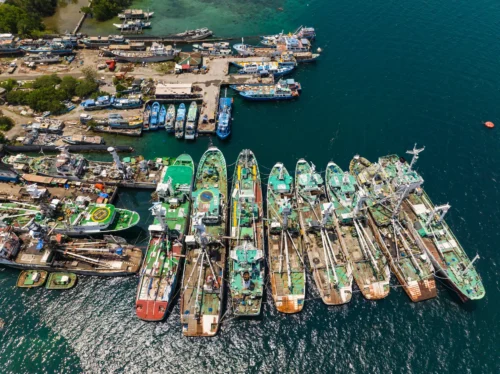
The effects of IUU across the Western Pacific are no different. In Papua New Guinea, the fishing industry plays a crucial role in bolstering the country’s economy and ensuring food security. The total market value of Papua New Guinean catch is estimated at up to $113 million USD per year, making IUU fishing a critical threat to the country’s prosperity and the livelihoods of its coastal communities. Similarly, in The Philippines, where the fisheries sector contributes an estimated 1.3 percent to the country’s GDP, IUU activity has experienced a “sharp increase” threatening the approximately 1.6 million jobs tied to the industry.
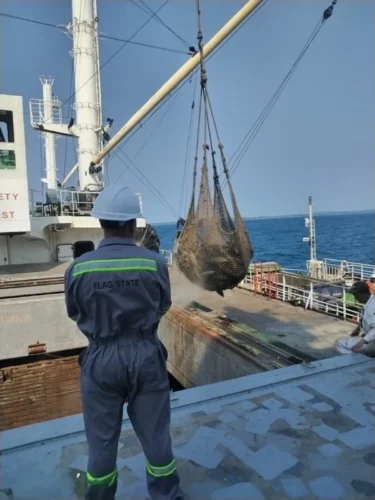
The Port State Measures Agreement (PSMA) is the world’s first binding international treaty designed to stop illegally caught fish from entering markets. It requires stronger port inspections and cooperation between countries and is a critical step towards ensuring that marine resources continue to provide for people in the future. Yet, effective implementation depends on consistent procedures, clear communication and trust among coastal, port and flag States.
Our Work
In August 2025, Global Fishing Watch and the Joint Analytical Cell, or JAC, facilitated a Philippines – Papua New Guinea Regional Knowledge Exchange on the PSMA in order to strengthen regional collaboration in the fight against IUU and bolster interpersonal cooperation between the two Pacific nations’ fisheries authorities.
The exchange capped a two-year collaboration between the JAC and the Philippines Bureau of Fisheries and Aquatic Resources (BFAR) and was supported by the UK Foreign, Commonwealth and Development Office (FCDO) with an aim to provide data, tools, analysis and capacity development in support of the Philippines’ implementation of the PSMA. Papua New Guinea was the natural counterpart for this knowledge exchange as the majority of tuna landed in the Philippines originates in Papua New Guinean waters and is transhipped through Papua New Guinea’s port of Rabaul.
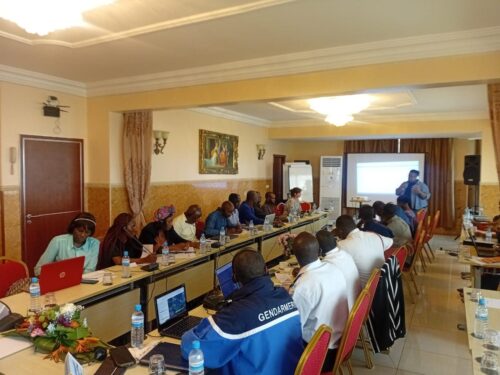
Hosted in Quezon City by the Philippines’ BFAR, the exchange saw delegations from Papua New Guinea’s National Fisheries Authority (NFA) and National Industry Association (NIA) join their Philippine colleagues. Participants shared experiences with PSMA implementation, including identifying shared challenges and exchanging lessons learned, comparing national processes for fulfilling flag, coastal and port State obligations under the PSMA, and discussing practical scenarios where information sharing supports vessel inspections, catch verification and the monitoring of in-port transshipment. In addition to these discussions, participants demonstrated their national monitoring systems and gained experience conducting practical exercises in Global Fishing Watch’s Vessel Viewer.
The exchange produced concrete results with participants agreeing to establish clearer information-sharing processes and a dedicated communication channel while also reaffirming their commitment to stronger cooperation through follow-up meetings.
Beyond technical outcomes, the workshop also strengthened personal ties — including the first in-person meeting of catch documentation experts from both countries after nearly a decade of remote collaboration. By its close, the exchange had reinforced regional solidarity between the Philippines and Papua New Guinea, laying a stronger foundation for cooperation, reaffirming a commitment to joint efforts in combating IUU fishing and advancing effective implementation of the PSMA.