Open Ocean Research Grant Program

Global Fishing Watch’s open ocean research grant program aims to enhance ocean governance by publicly sharing data on human activity at sea through the expansion of our community of practice. By collaborating with global researchers to apply our core technologies in the ocean governance space, this grant program seeks to strengthen our network of research partners and maximize the impact of the datasets we publish.

Submission for 2026 Are Now Closed

We’re pleased to open the 2026 cycle of our small grant program, supporting research that advances ocean governance through the use of publicly available data on human activity at sea.

The program aims to enhance our network of research partners by inviting researchers worldwide to strengthen core technologies, expand datasets and apply them to real-world ocean governance challenges.

New for 2026: A letter of intent (LOI) stage has been introduced to streamline the application process. This initial step allows Global Fishing Watch to assess alignment, confirm eligibility and provide early guidance while reducing the burden of submitting a full proposal on applicants. Only selected applicants at the LOI stage will be invited to submit a full proposal.

Award amount

    • Individual category: up to US$10,000 
    • Group category: up to US$20,000 

Key dates for 2026

    • April 7: Call for letters of intent
    • April 14: Informational webinar
    • May 10: Submission deadline for letters of intent (LOIs must be submitted before 23:59 UTC)
    • July 1: Invitation for full proposals
    • August 31: Submission deadline for full proposals
    • October: Award notification
    • November: 2026 cohort commences. 

We hosted an informational webinar on April 14th. Watch the recording.

For any questions, please contact: [email protected] 

2025 cohort

Following a rigorous review and selection process, we are thrilled to announce the inaugural cohort of the open ocean research grant program. These projects represent cutting-edge research and actionable strategies to advance ocean transparency, sustainability and fisheries management worldwide. Receiving just shy of 175 proposals, we selected 11 innovative finalists to support in their quest to find solutions for some of the biggest ocean challenges. We look forward to sharing updates and outcomes over the next two years as the cohort progresses. 

Projects

Boas Práticas Collective
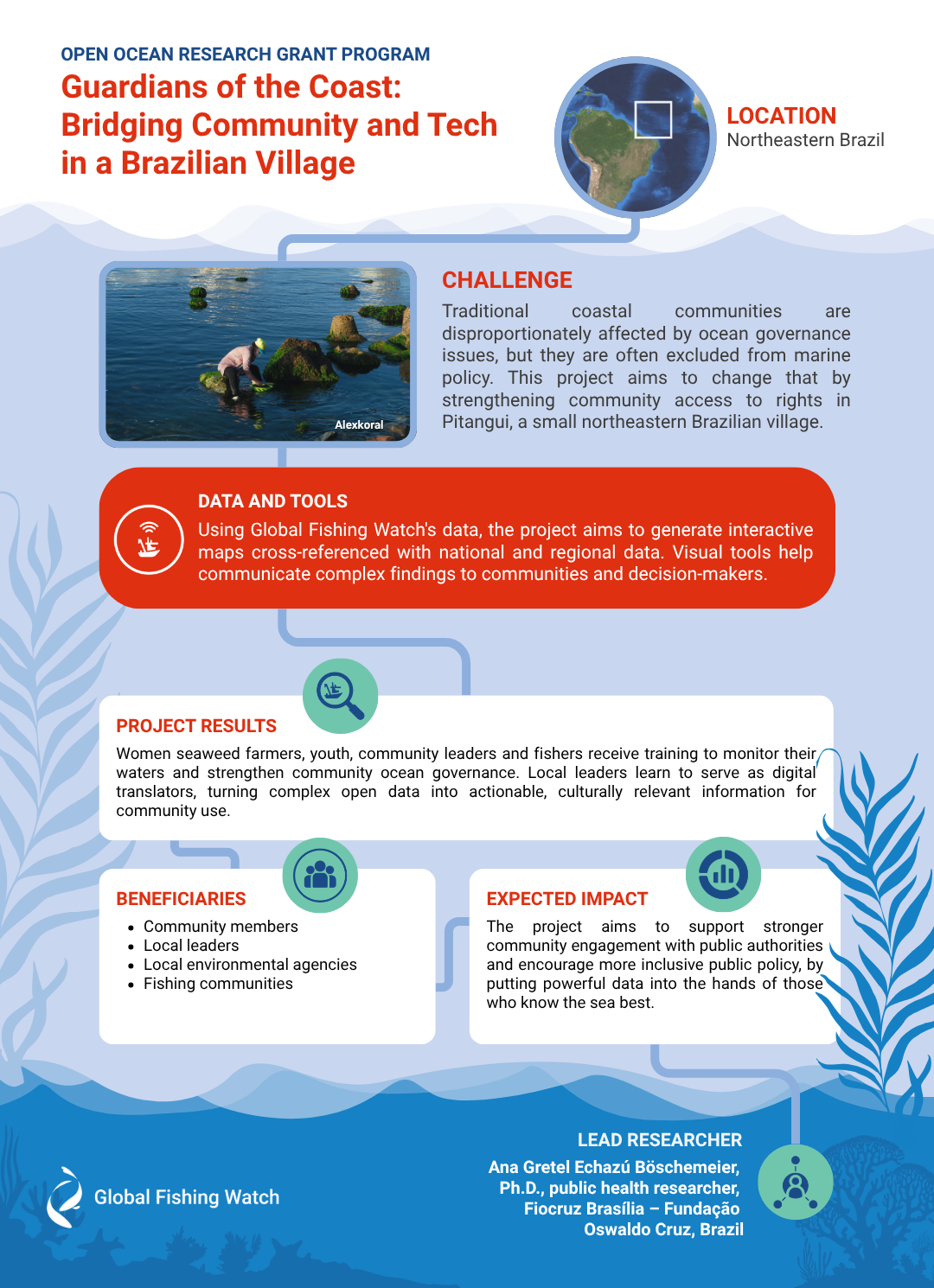
Female Guardians of the Coast — Gender-Centered Technology and Tradition for Ocean Futures in Northeastern Brazil

Led by Ana Gretel Echazú Böschemeier, this project uses Global Fishing Watch datasets to analyze non-traditional maritime activity around the traditional fishing territory of Pitangui, Rio Grande do Norte in Northeastern Brazil and train the community in using Global Fishing Watch data to support local community monitoring efforts.

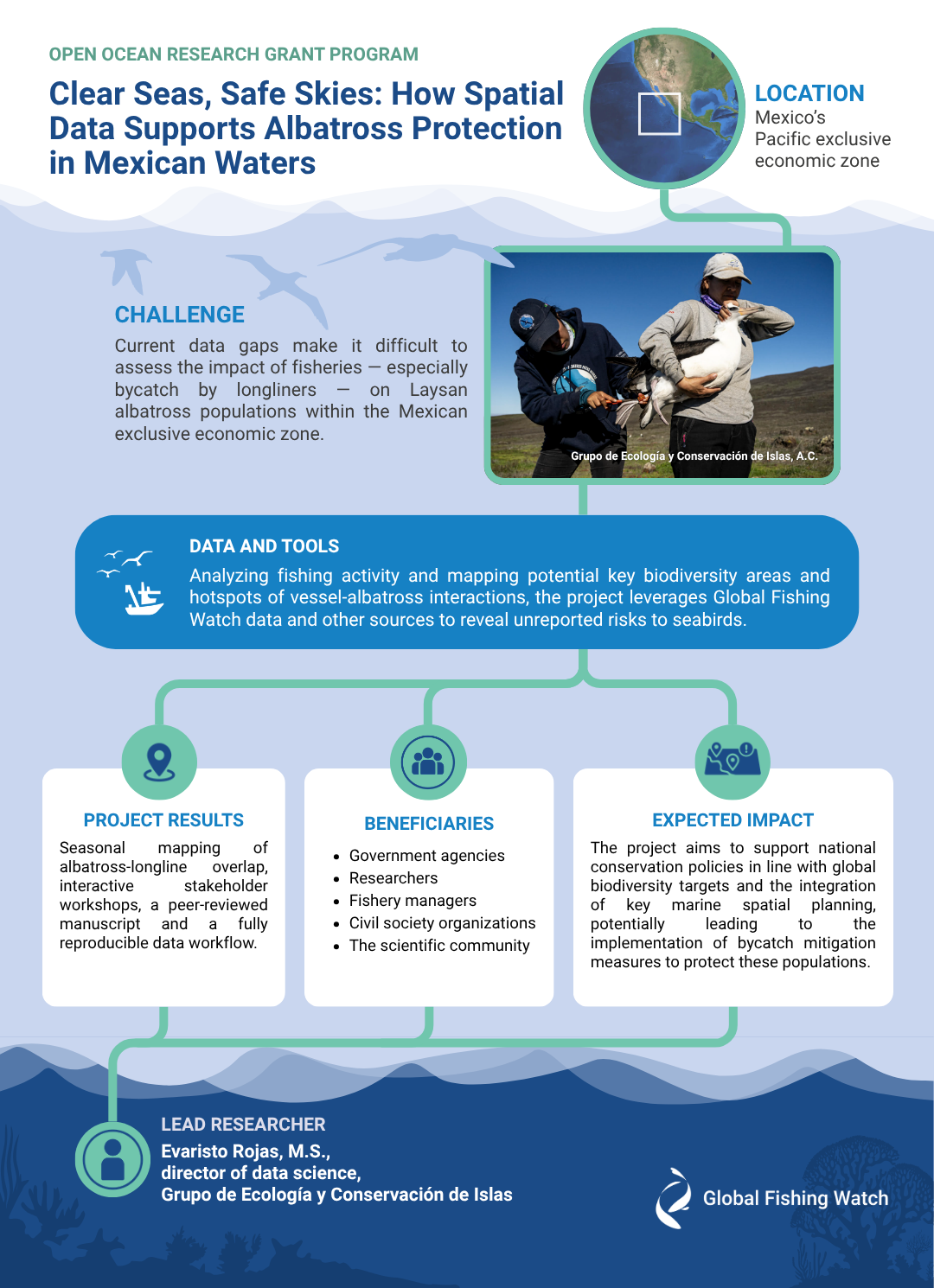
Grupo de Ecología y Conservación de Islas 
Assessing the Overlap Between Fishing Activity and the Distribution of Laysan Albatross in the Mexican Pacific

Led by Evaristo Rojas, this team takes a closer look at the impact of fisheries on Laysan albatross populations within the Mexican exclusive economic zone, with a special focus on identifying hotspots of bycatch risk.

Hola ORGCAS 
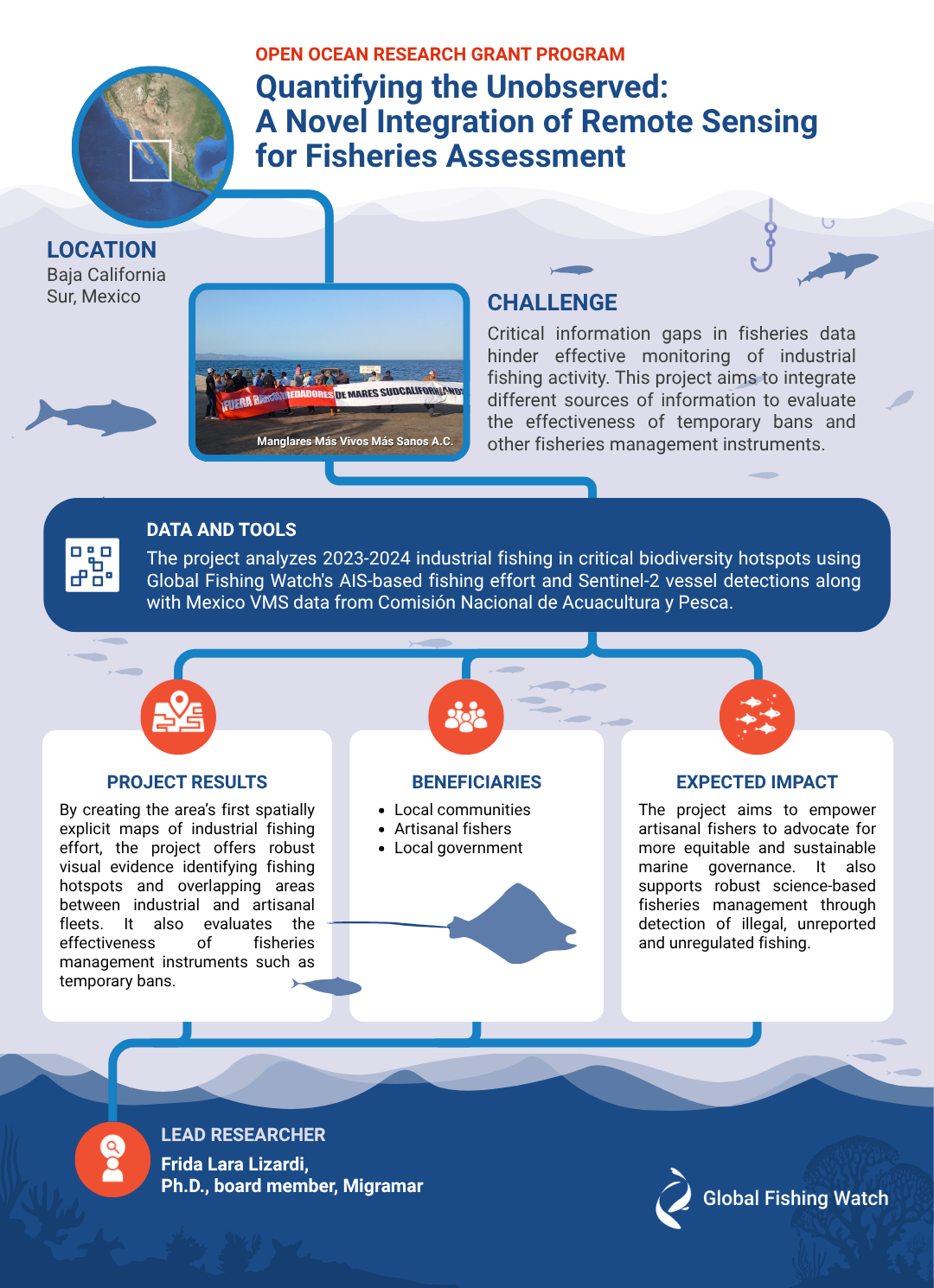
Quantifying the Unobserved: A Novel Integration of Remote Sensing for Fisheries Assessment in Baja California Sur, Mexico 

Led by Dr. Frida Lara Lizardi, this project researches potential illegal, unreported and unregulated fishing within the Dos Mares marine reserve alongside critical artisanal fisheries to ensure authorities have the information needed to maintain protection. 

Imali Manikarachchige
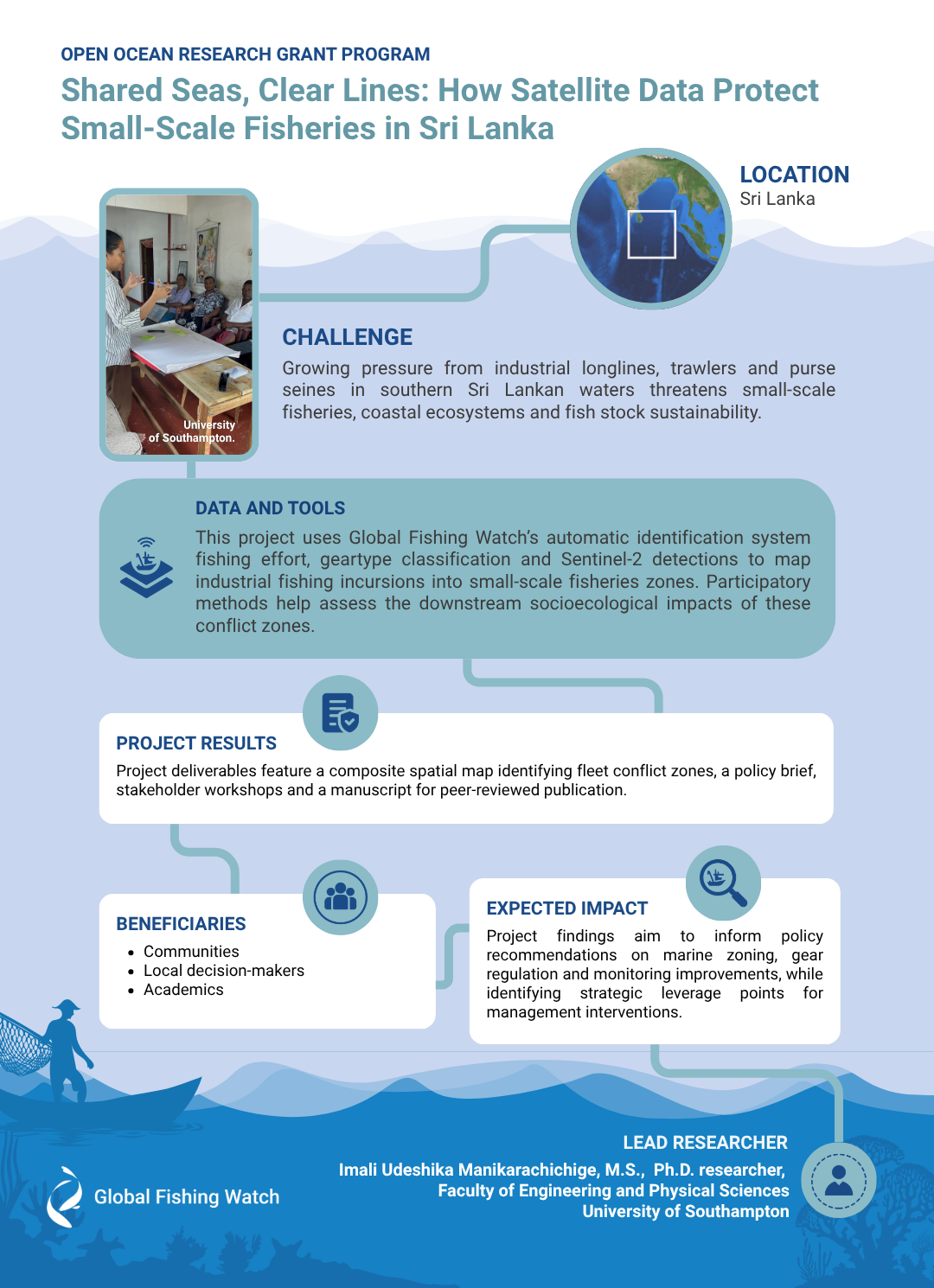
A Systems Approach to Assess Industrial Gear Stress on Small-Scale Fisheries in Sri Lanka: Integrating Participatory Approaches With Global Fishing Watch Data for Spatial and Socio-ecological Insights

Focusing in Sri Lanka, Imali assesses the vulnerability of fisheries systems to various stressors and uses a systems perspective to understand how traditional fisheries communities build resilience to these changes.

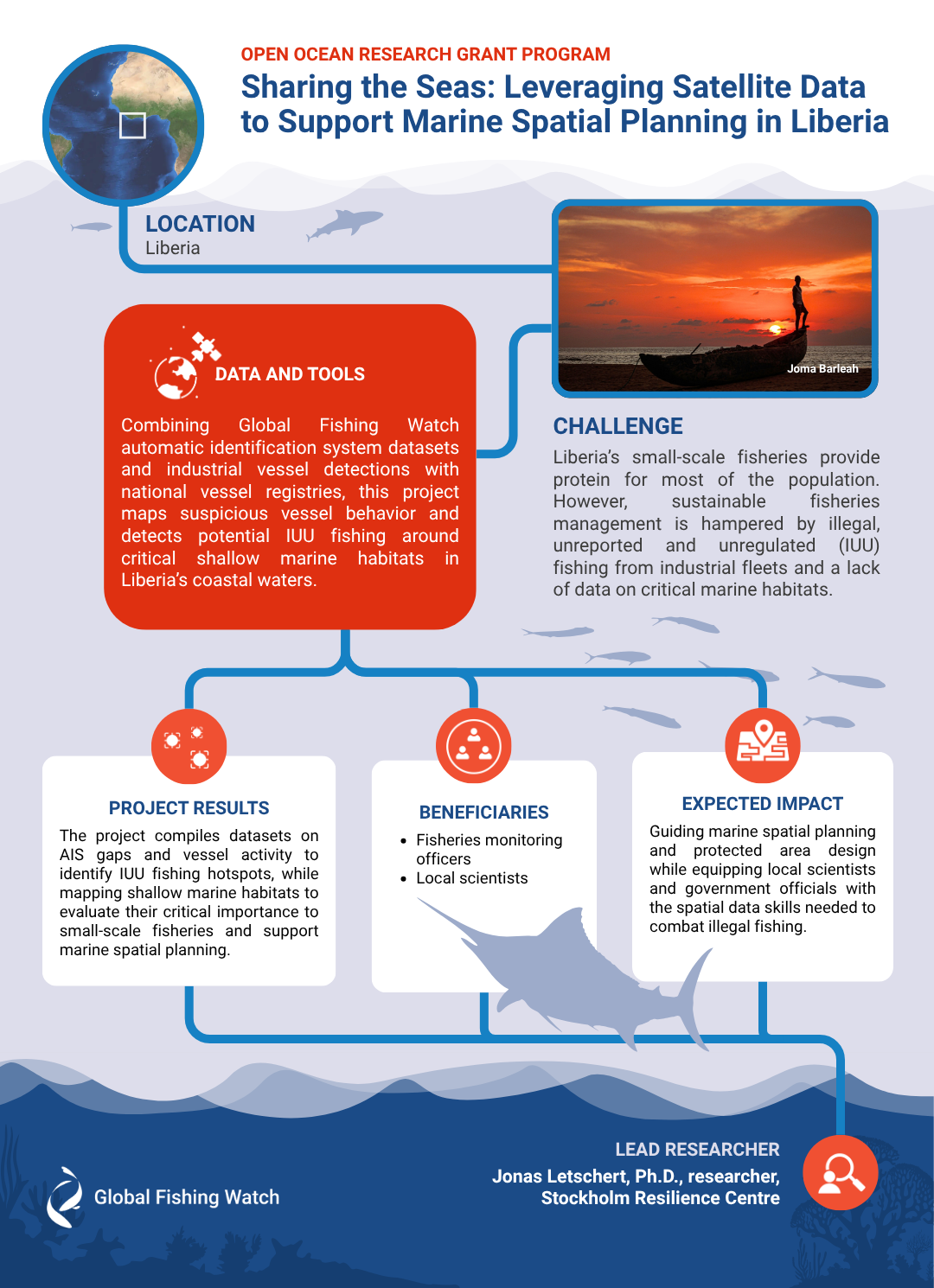
Jonas Letschert
Out of the Blue: Promoting Marine Spatial Planning in a Data-Scarce Region 

Focused in Liberia — and as part of national marine spatial planning efforts — this project maps coastal waters and researches potential illegal, unreported and unregulated fishing in industrial fisheries operating within the country’s waters, with a focus on data quality and integrating different sources of information.

Juliano Palacios Abrantes
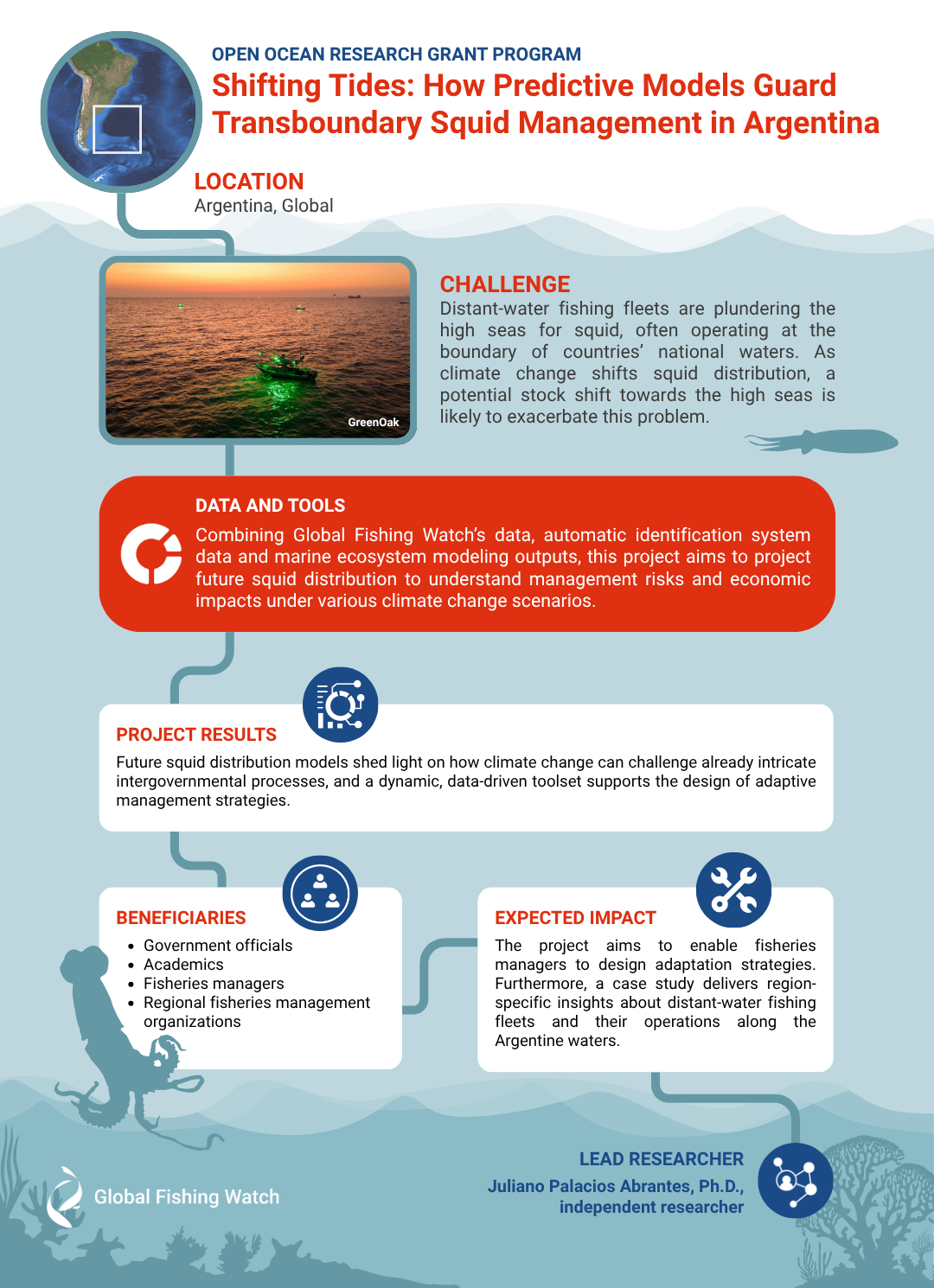
Exploring Potential International Conflicts Resulting from Climate-Driven Shifts of Commercially-Important Squid Populations

Led by Juliano Palacios Abrantes, this team seeks to develop a model for squid populations in future climate scenarios and produce a case study to address the potential economic impacts of this redistribution across Argentina’s exclusive economic zone.

Key Marine Consulting
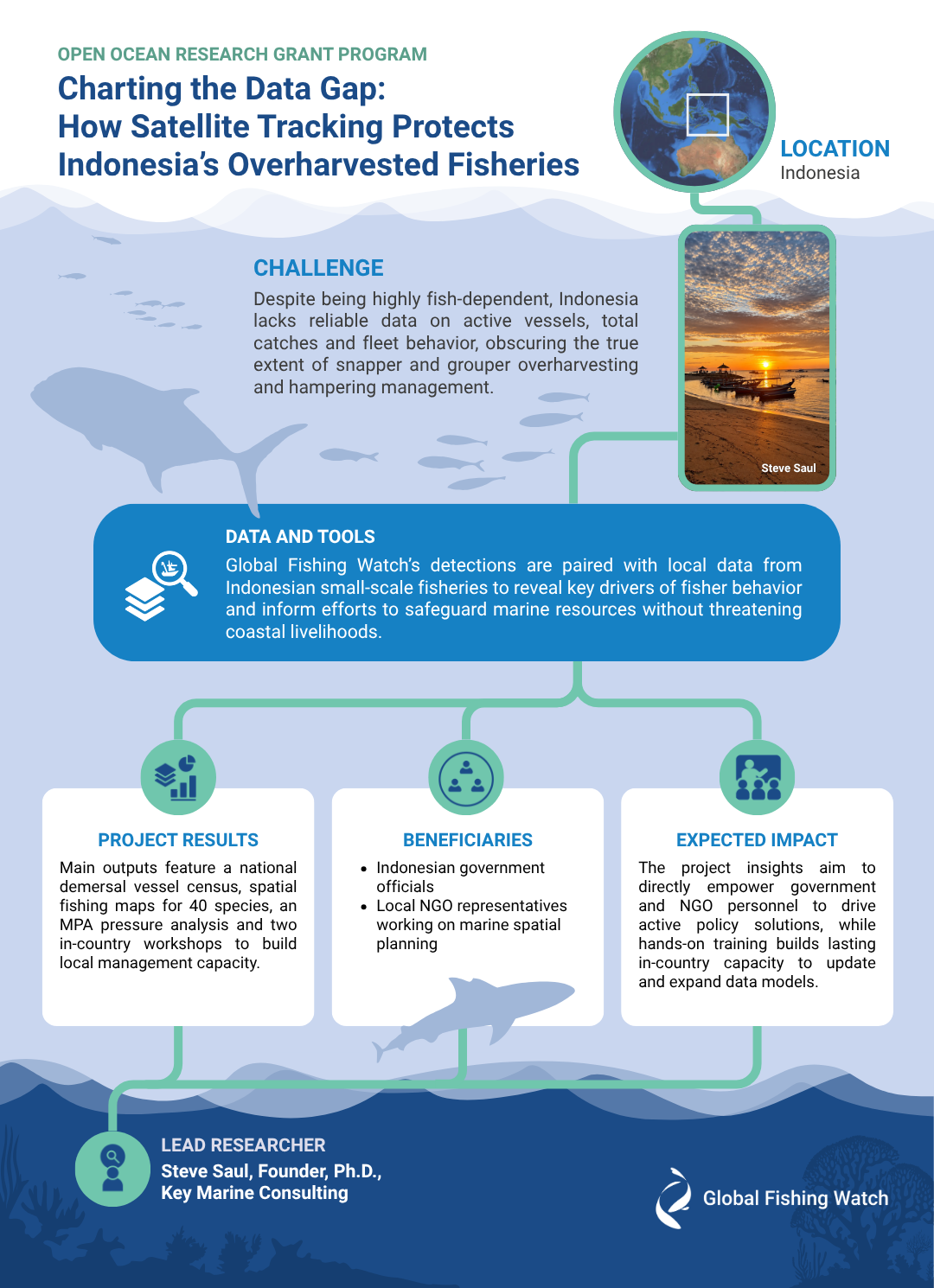
Cross Pollinating Global Fishing Watch and Indonesian Government Demersal Fishing Location Data to Understand Fishing Behavior and Fleet Size in Support of Catch Limit Policy Development and Other Policy Considerations

Led by Steven Saul, this project utilizes multiple data sources from artisanal demersal fisheries in Indonesia and overlays them with Global Fishing Watch vessel tracking and optical imagery.  By analyzing these datasets, Saul aims to understand what drives fisher behavior and ultimately inform policy decisions that do not impact small scale fishers livelihoods. 

Marine Biological Association
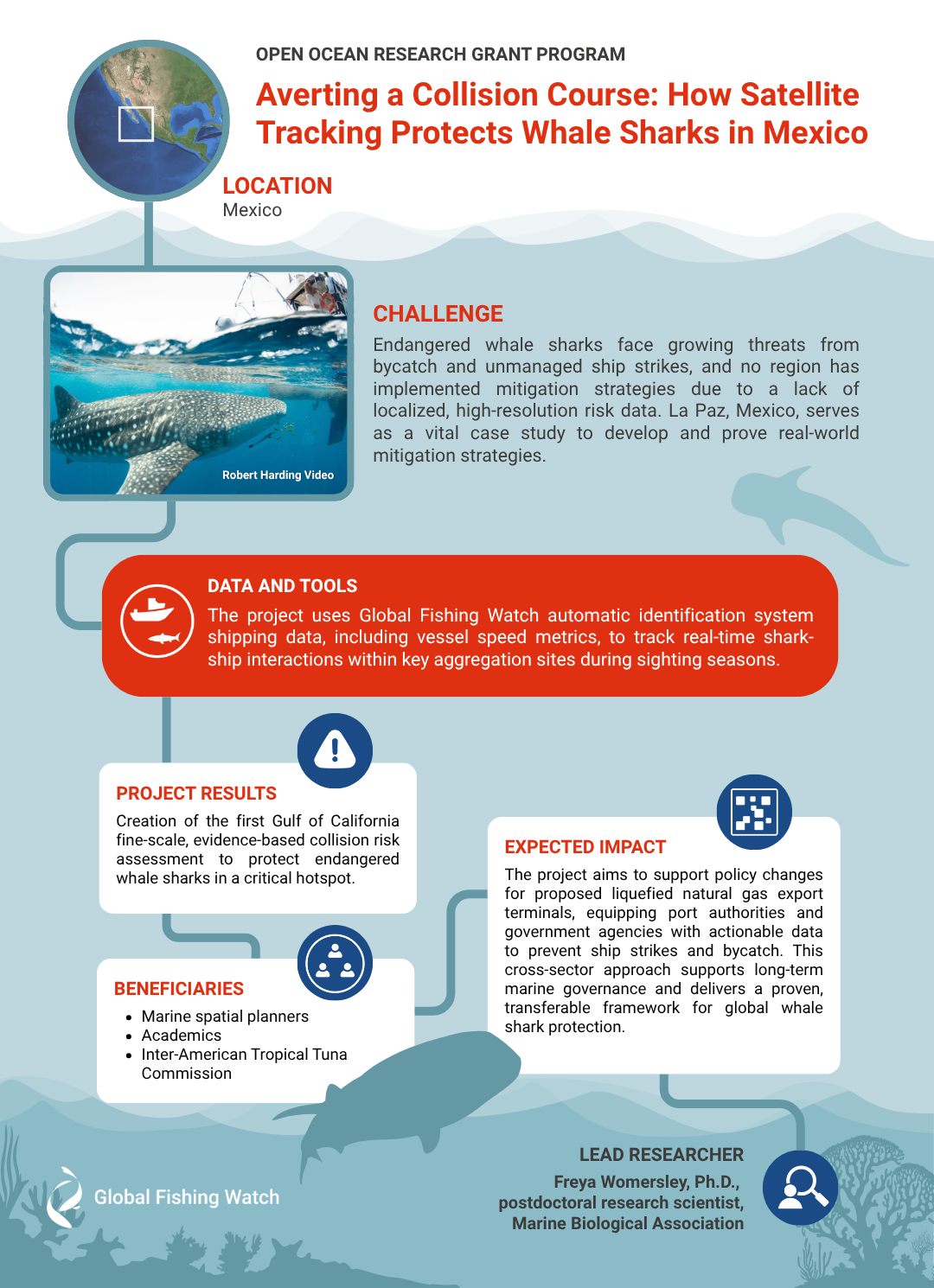
Navigating Coexistence: Safeguarding Whale Sharks in an Industrializing Gulf

Led by Freya Womersley, this project studies the movement of whale sharks around La Paz, Mexico, and analyzes their interactions with vessels to inform policy and contribute with actionable insights for marine spatial planning.

Ricardo Oliveros Ramos
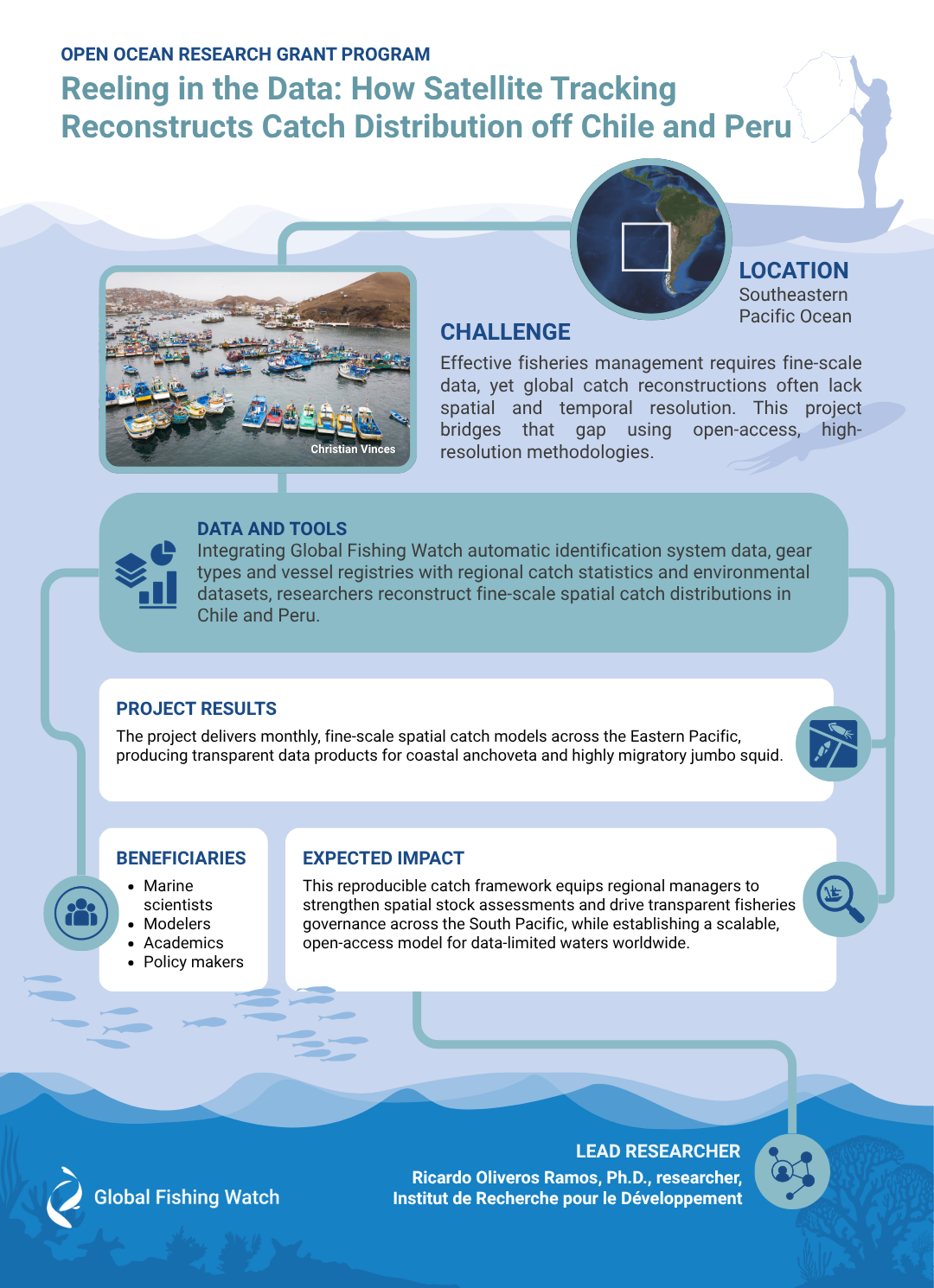
Advancing Regional Fisheries Modeling Through High-Resolution Catch Reconstructions with Open Data

Ricardo’s research develops a method for catch reconstruction using open access datasets, focusing on two contrasting fisheries in Chile and Peru. All outputs of this project will be open and freely accessible, and will help inform fisheries management in the region. 

Shimoni Turtle Watch
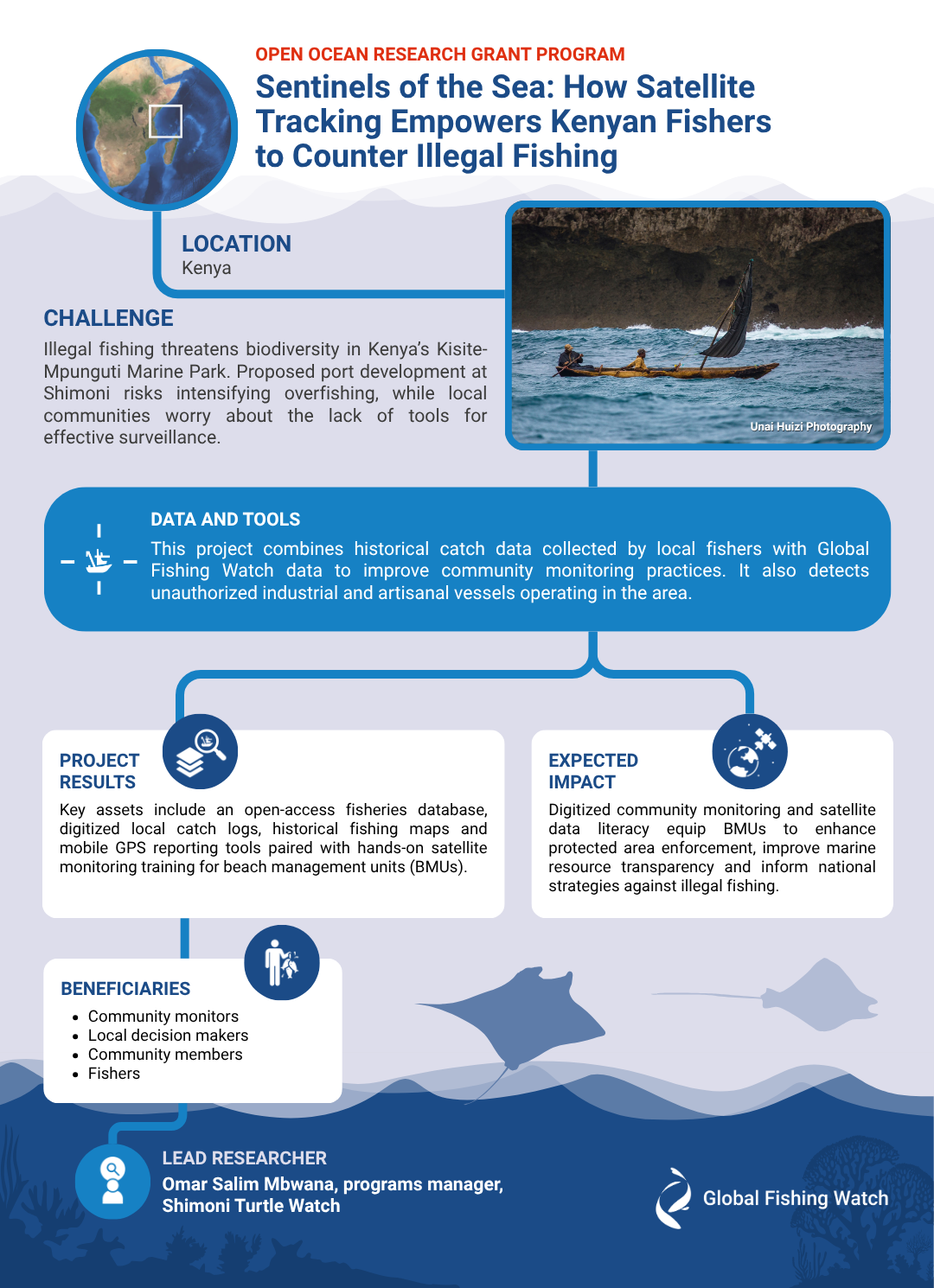
Fighting Illegal Fishing with Community Empowerment in Wasini, Shimoni and Mkwiro, Kenya

This multidisciplinary team seeks to ground-truth data on fish landings in conjunction with industrial fishing activity to enhance community literacy of Global Fishing Watch data and strengthen control and oversight in three beach management units. 

Tom Leven
Watching Industrial Fishing in a Changing Sea: Tracking and Validating Longline Activity in the Mediterranean 

Tom studies large pelagic fisheries in the Mediterranean and uses independent data to validate Global Fishing Watch’s longline fishing model with the goal of better understanding when and where large pelagic fisheries are operating, and bolstering international cooperation and sustainable management practices. 

Scroll to Top

Help us improve the site

Take a quick website survey to help us build a better experience for visitors like you.