research

semounts

Satellite Data Casts Light on Seamounts at Risk

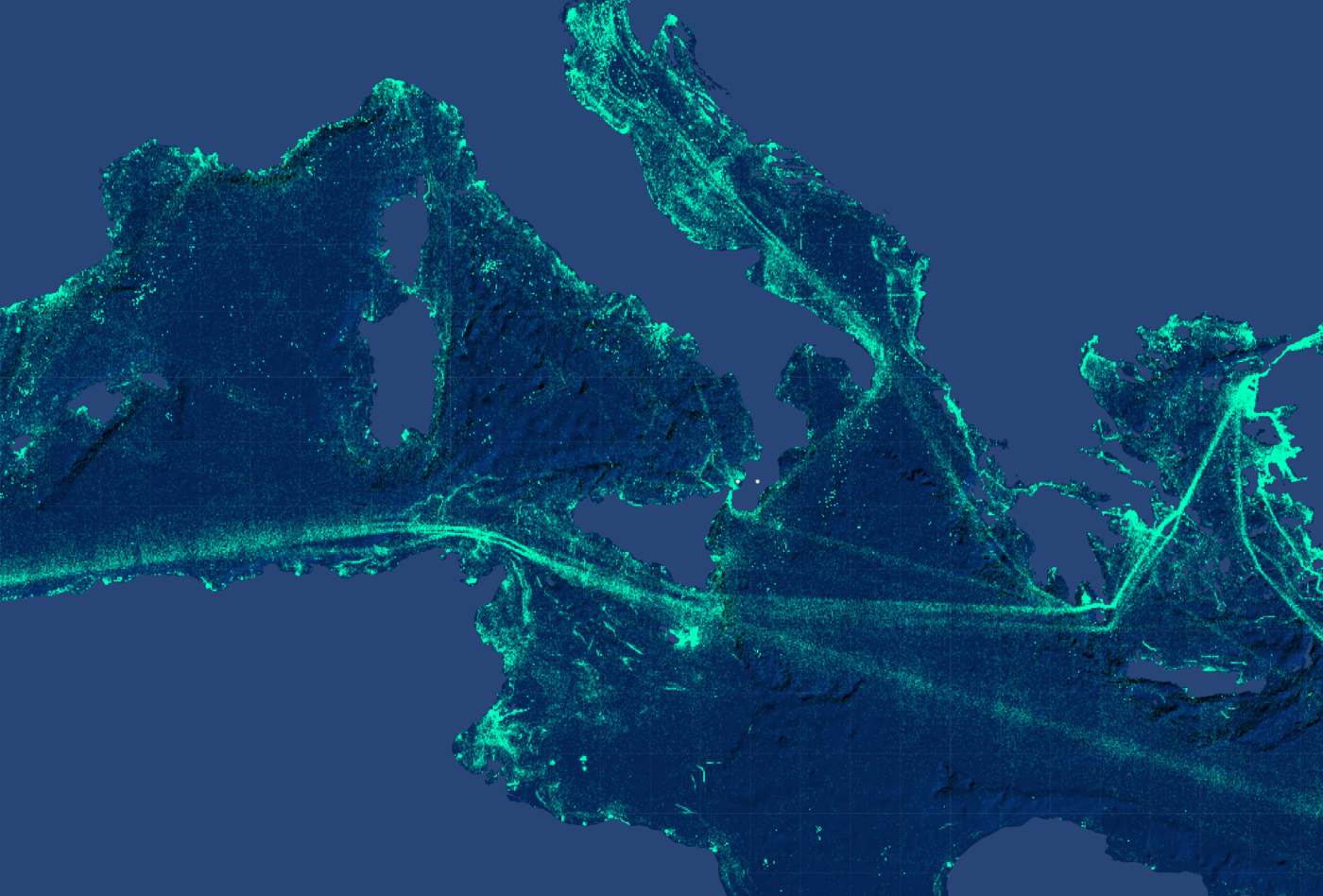
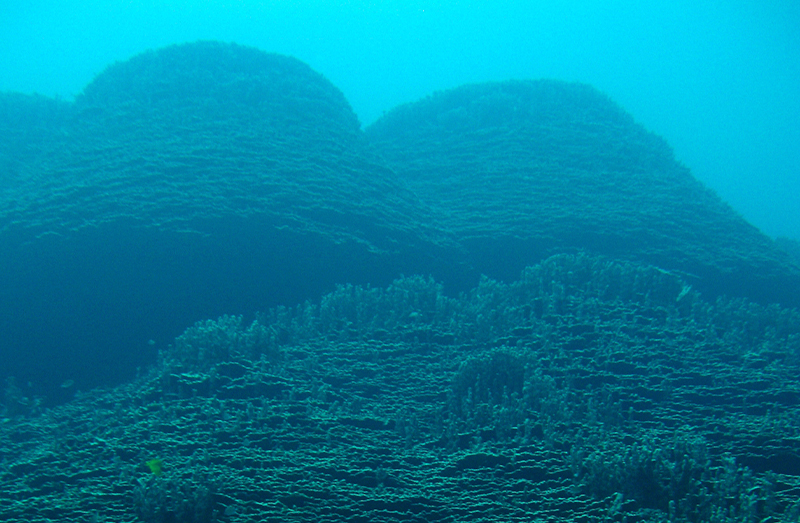
Emerging tools and datasets help quantify fishing pressure and can inform management at remote, unmonitored seamounts Seamounts—large underwater mountains— hold vital biological diversity, but they also contend with heavy exploitation. Numbering in the tens of thousands across vast stretches of the high seas, they have been favored targets for longline and deepwater trawl vessels. And
Satellite Data Casts Light on Seamounts at Risk Read More »

New report: How liberating ocean data will equip companies to avoid illegally caught seafood in their supply chains

Geneva, Switzerland, 29 April 2022 – A report published today sets out how ocean data transparency can enable companies throughout seafood supply chains to avoid produce from illegal, unreported and unregulated (IUU) fishing The report, ‘Assessing Seafood Supply Chains: New Public-Private Partnership Will Support Companies in Assessing IUU Fishing Risks Using Vessel Data’, is part

New report: How liberating ocean data will equip companies to avoid illegally caught seafood in their supply chains Read More »

New Techniques Reveal Fishing Vessel Identities in the Dark of Night

New Global Fishing Watch technology merges nighttime images with GPS datasets to observe vessels not broadcasting their positions When the sun sets, human activity on the ocean goes on. And every night, satellites snap a picture of all the activity taking place down below, including vessels at sea. Vessels often are equipped with bright lights

New Techniques Reveal Fishing Vessel Identities in the Dark of Night Read More »

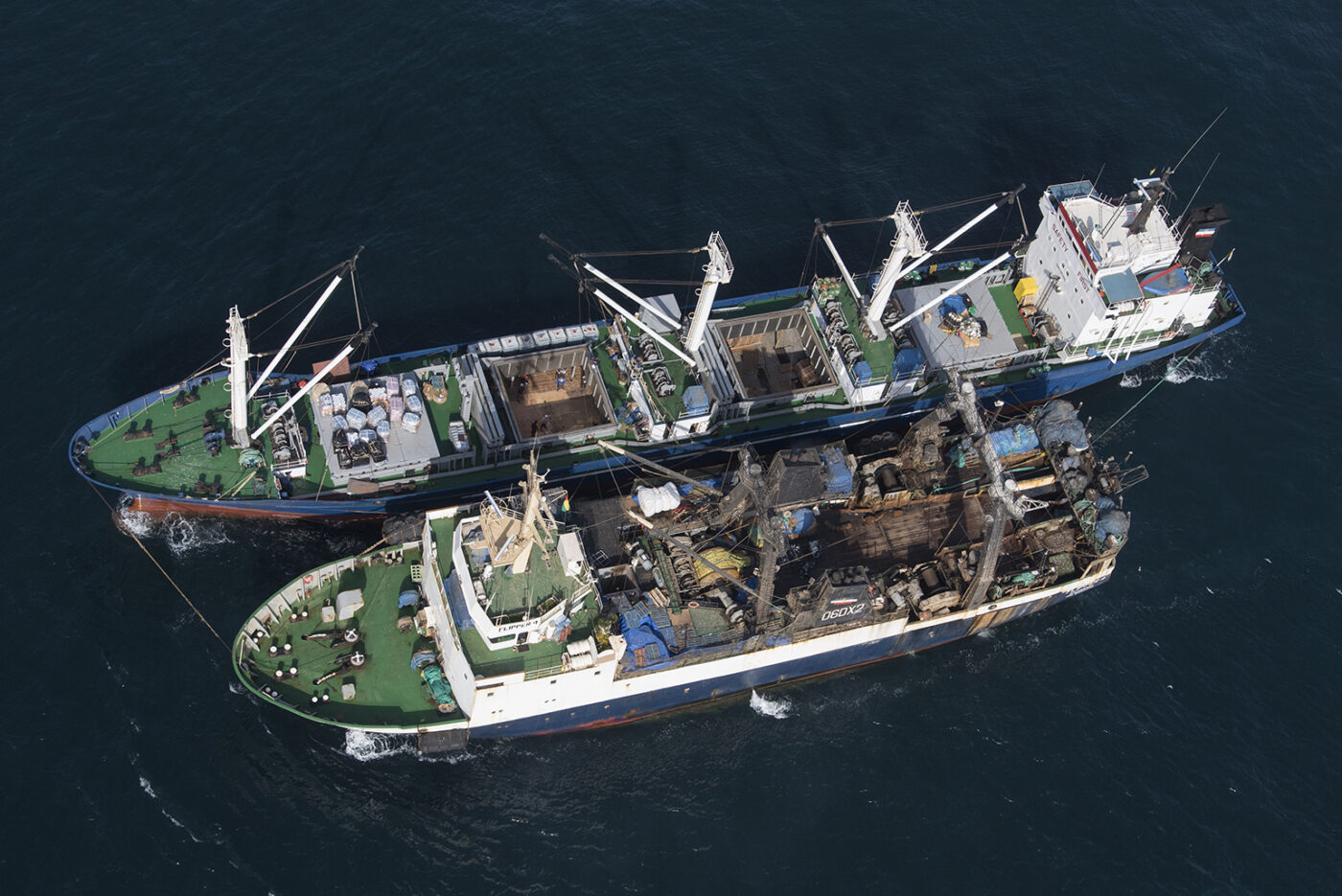
Aerial view of two large ships at sea, one with a burnt, damaged center section. Captured using satellite technology in the Pacific region, the vessels are positioned closely side by side on calm, dark blue water.

Recent Study Shows How Satellite Technology Can Help Track Illegal Fishing Throughout the Pacific Region

Enhanced transshipment monitoring is key in reducing illegal catch Tuna fisheries are vital to livelihoods, economies and cultures across the Pacific Islands region. Producing over half of the global catch—a portion estimated at $26 billion per year—the Pacific is home to the world’s most productive tuna fisheries. Ensuring the sustainability of these tuna fisheries is no small

Recent Study Shows How Satellite Technology Can Help Track Illegal Fishing Throughout the Pacific Region Read More »

Monitoring is Key for the Future of Guyana’s Marine Environment

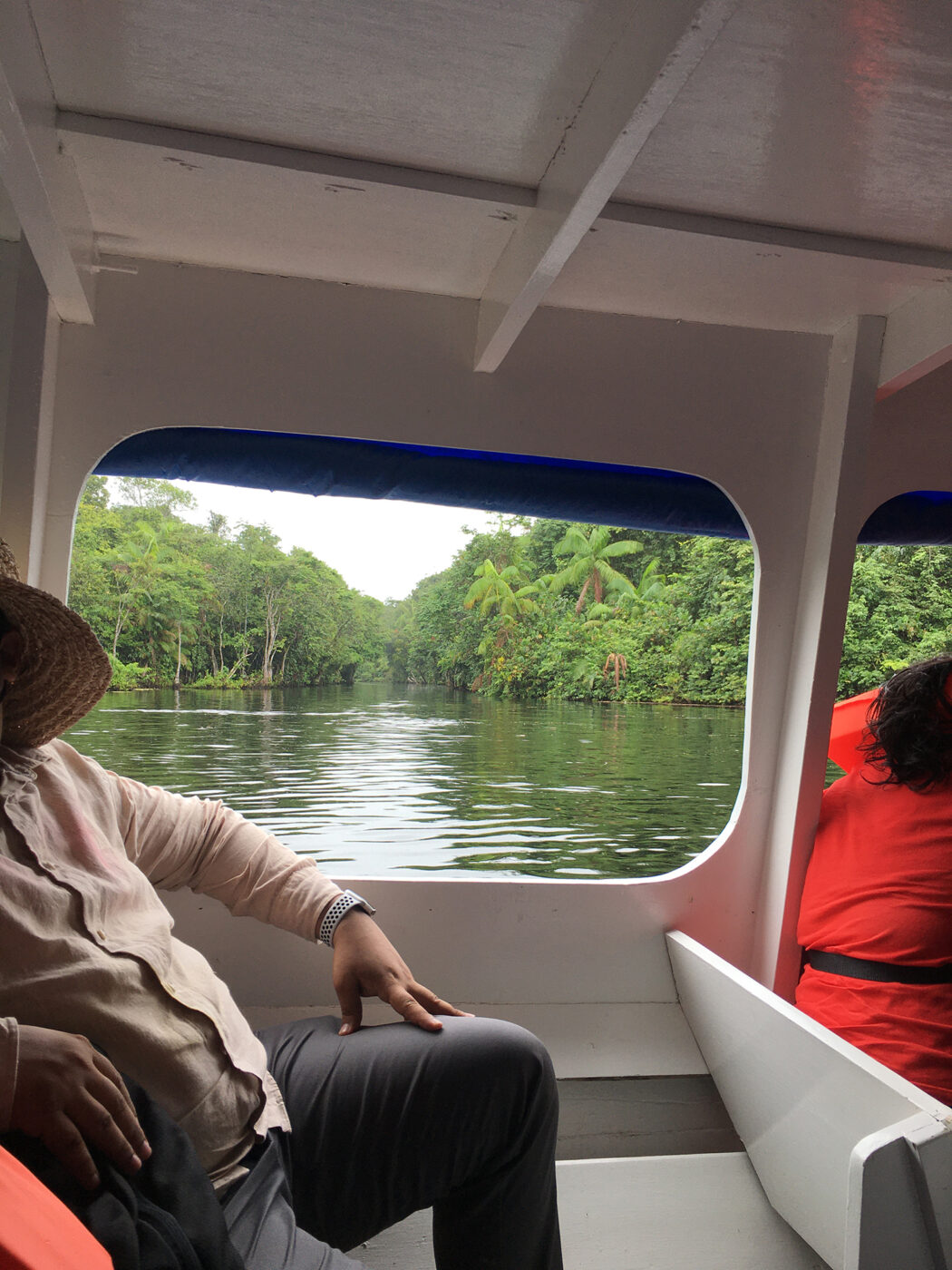
Global Fishing Watch tools offer a chance for balance where oil and ecosystems cross paths For centuries, the numerous rivers and creeks that make their way to the Atlantic have acted as roads in the everyday lives of Guyana’s Indigenous communities, and avenues for economic activities on Guyana’s coast. The ocean has historically and culturally

Monitoring is Key for the Future of Guyana’s Marine Environment Read More »

Winners Announced for xView3 Challenge to Fight Illegal Fishing

Cutting-edge computer vision algorithms combined with synthetic-aperture radar (SAR) satellite imagery hold the future in the detection and defeat of illegal, unreported, and unregulated fishing January 31, 2022–Mountain View, Calif–The Defense Innovation Unit (DIU) and Global Fishing Watch (GFW) today announced the five winners of xView3, a competition to find the best open-source algorithm to

Winners Announced for xView3 Challenge to Fight Illegal Fishing Read More »

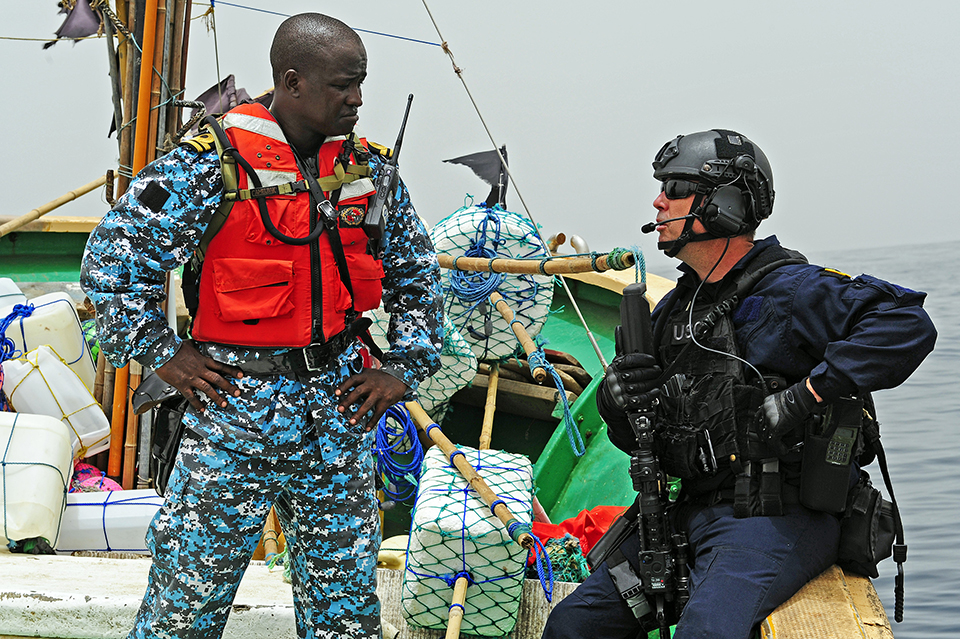
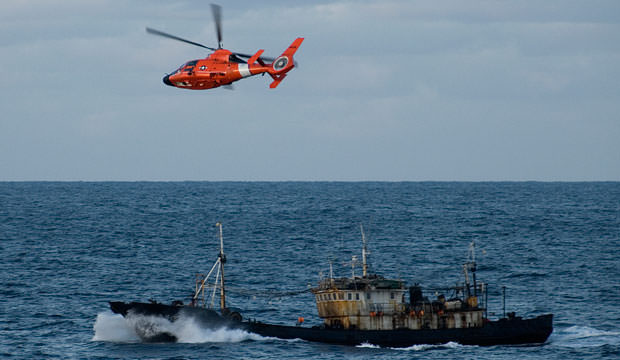
United States Coast Guard patrols over illegal driftnet fishing vessel

xVIEW3 Challenge: Just Weeks left to Submit Algorithms to Help Detect and Defeat Illegal Fishing

xVIEW3’s leader board has been heating up with potential computer vision solutions to detect dark vessels to help shine a light on illegal, unreported and unregulated (IUU) fishing activity Washington, D.C. — Close to 900 participants have begun to submit algorithms that could help transform our ability to rapidly identify potential IUU fishing activity and more effectively

xVIEW3 Challenge: Just Weeks left to Submit Algorithms to Help Detect and Defeat Illegal Fishing Read More »

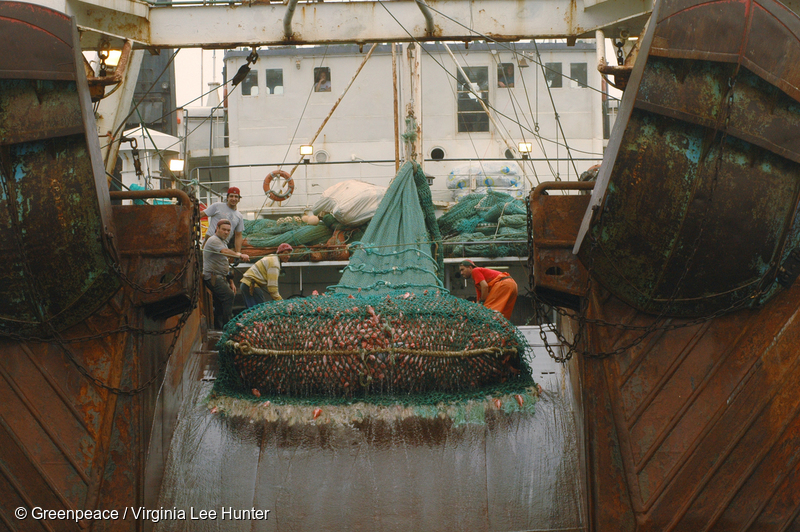
The Overlooked Impact of Bottom Trawling

A new study published by the scientific journal Nature is the first to quantify the potential release of carbon dioxide (CO2) into the ocean from trawling and finds that trawling is pumping hundreds of millions of tons of CO2 into the ocean every year. Juan Mayorga, marine scientist and study coauthor, talks about the groundbreaking

The Overlooked Impact of Bottom Trawling Read More »

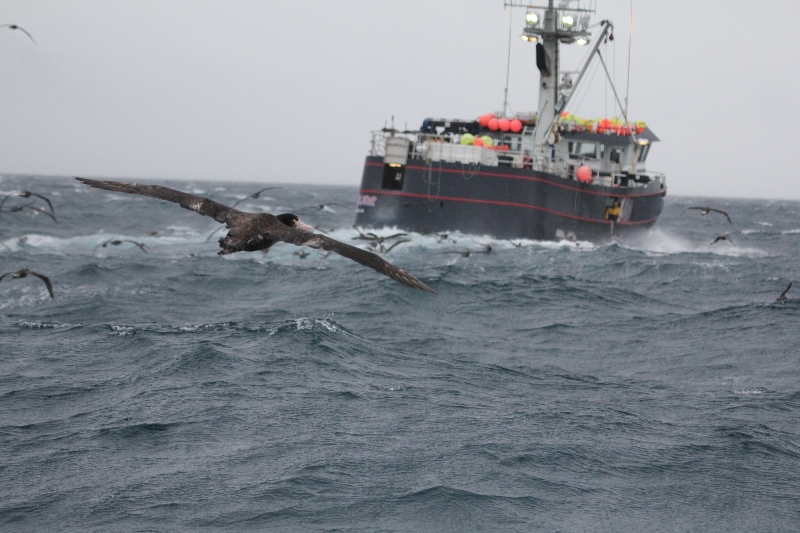
Close encounters between albatross and fishing vessels in the North Pacific

Rachael Orben is an Assistant Professor at Oregon State University’s Hatfield Marine Science Center. In September of 2016, Leigh Torres, associate professor at Oregon State University, and I attended the 6th International Albatross and Petrel Conference. Somehow, amid all of the science that filled the week, Leigh first saw the Global Fishing Watch fishing map. She

Close encounters between albatross and fishing vessels in the North Pacific Read More »

Half the Ocean: Updating The Global Footprint of Fisheries

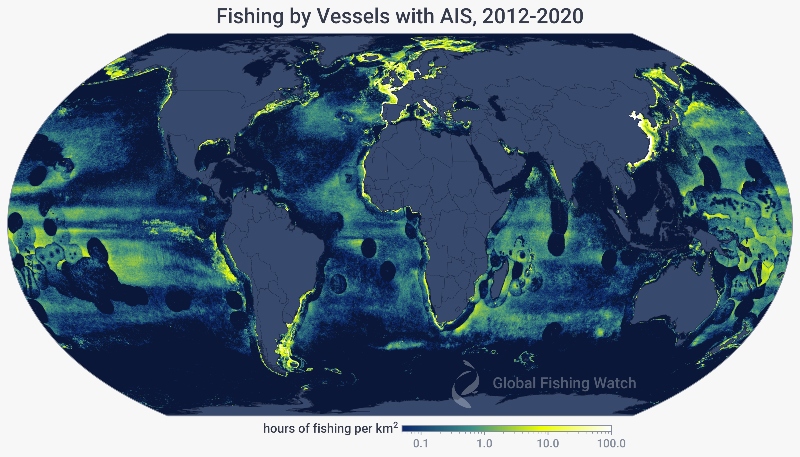
Global Fishing Watch’s updated fishing data offers new insight into the presence and behavior of the global fishing fleet In 2018, we published the first-ever global assessment of commercial fishing activity in Science. We tracked over 60,000 fishing vessels between 2012 and 2016, and estimated that fishing occurred on more than half of the ocean. 

Half the Ocean: Updating The Global Footprint of Fisheries Read More »

COVID-19 Brings Unmatched Downturn in Global Fishing Activity

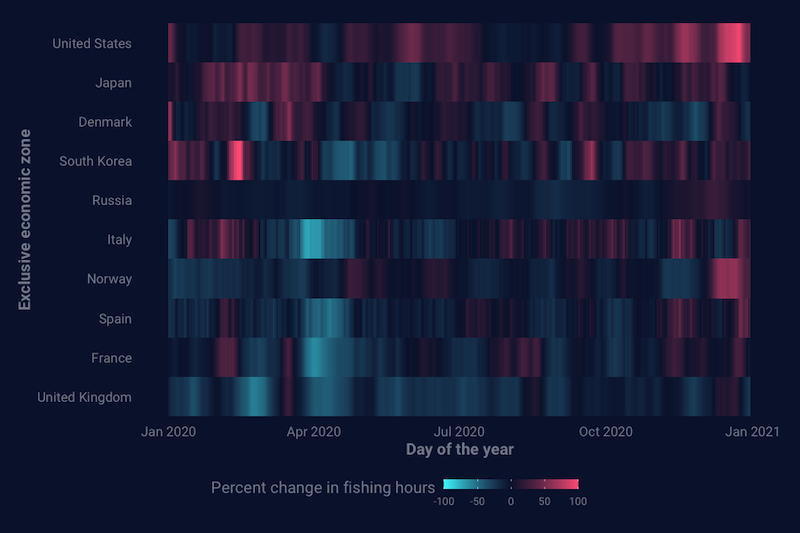
One year into the pandemic that triggered turmoil around the world, an analysis of Global Fishing Watch data sheds light on shifts in global fishing activity  As the world marks the March 11th anniversary of the World Health Organization’s declaration of the COVID-19 pandemic, the fishing sector—like many industries—continues to feel the effects. With our

COVID-19 Brings Unmatched Downturn in Global Fishing Activity Read More »

Illegal fishing by dark fleets in north korea

A 2020 Analysis: Detecting the Dark Fleets in North Korea and Russia

Satellite technology reveals decline in illegal fishing activity in North Korean and Russian waters compared to previous years In July 2020, as the COVID-19 pandemic was sweeping across the globe, Global Fishing Watch published a groundbreaking scientific paper revealing one of the largest known cases of illegal fishing. The foreign fishing activity detected across 2017-19 in the Democratic

A 2020 Analysis: Detecting the Dark Fleets in North Korea and Russia Read More »

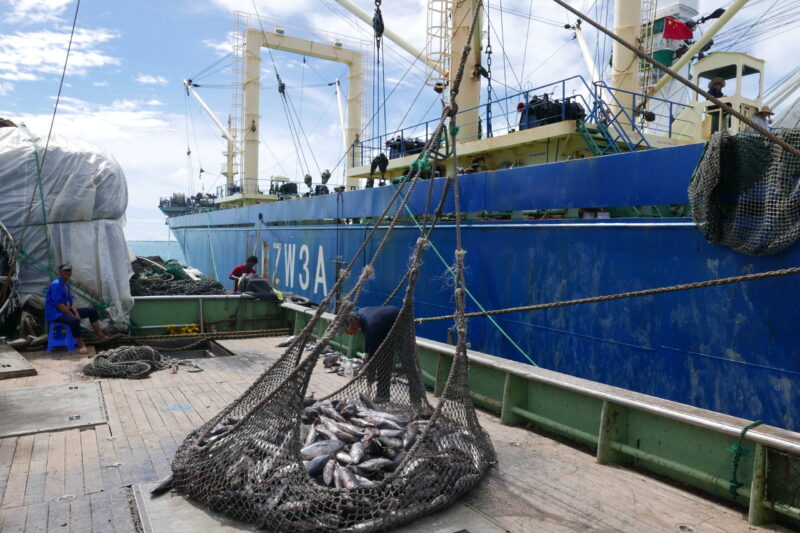
Tuna transshipment in the Indian Ocean

New Study Unveils Risk of Forced Labor in Fisheries

Researchers leverage satellite data, machine learning, and human rights expertise to develop model that determines risk of forced labor on fishing vessels https://www.youtube.com/watch?v=G5gWgYoR_rU&ab_channel=GlobalFishingWatch In 2016 our research group at the Environmental Market Solutions Lab (emLab) was collaborating with a team of fisheries scientists and economists to better understand the economic rationale behind fishing on the high seas.

New Study Unveils Risk of Forced Labor in Fisheries Read More »

Scroll to Top

Help us improve the site

Take a quick website survey to help us build a better experience for visitors like you.