
A Research Roadmap: How AI and Satellites Will Drive Transparency in 2026
- By David Kroodsma
- Published
From mapping the world’s small-scale fleet to deploying AI agents to monitor marine reserves, Global Fishing Watch’s research team is illuminating human activity across the ocean like never before.
Just three months in and 2026 is already shaping up to be a productive year for research at Global Fishing Watch. Thanks to a pivotal grant from The Audacious Project in 2023, our research team has expanded its horizons to pursue an ambitious goal: mapping all human activity at sea. Our scientists, stationed all over the world, develop the core technologies behind Global Fishing Watch’s platform while also producing high-impact research that advances ocean transparency. This year, we are working on several projects that we believe will transform how the world understands and manages the ocean.



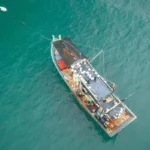
Mapping the global small-scale fleet from space
Roughly one-third of the world’s catch comes from small-scale fishing vessels, yet most of these boats remain invisible to current monitoring systems.
According to some estimates, there are over two million of these vessels operating close to shore. They are essential to global food security and the livelihoods of coastal communities across much of the developing world. But their activities are largely absent from global fisheries data.
Using satellite imagery from Planet Labs, we are now imaging coastal waters around the world every one to three weeks. Our systems process roughly 2 million square kilometers of ocean per day, detecting smaller vessels alongside other vessel traffic and giving us a better view of fishing activity close to shore.
This work will yield a defining achievement: the first global assessment of small-scale vessel activity based on satellite imagery. Our first application is straightforward but powerful —determining the integrity of these artisanal fishing zones and whether or not industrial vessels are staying out of them.
Experimenting with AI agents for ocean monitoring
At the same time, artificial intelligence is opening new possibilities for monitoring the ocean at scale.
We have been experimenting with AI agents — autonomous systems designed to perceive, think, and act to achieve specific goals — that can access Global Fishing Watch data via application programming interfaces and tasking them to act as analysts watching for vessels operating near marine reserves. The agents scan vessel movements and identify patterns that may warrant closer attention.
This work is still highly experimental, but early trials are promising. In tests, the agents have flagged vessels behaving suspiciously — for example, ships that disable their transponders while operating near protected areas.
Conscious that AI applications can often perpetuate inherent biases that exist in the data that we receive, human analysts always review the results. But AI dramatically accelerates the process of identifying potential issues. We think AI agents can fundamentally change how we monitor the ocean and help us deliver on our 2030 goals to monitor all of human activity at sea.
Revealing human activity at sea through cutting-edge research
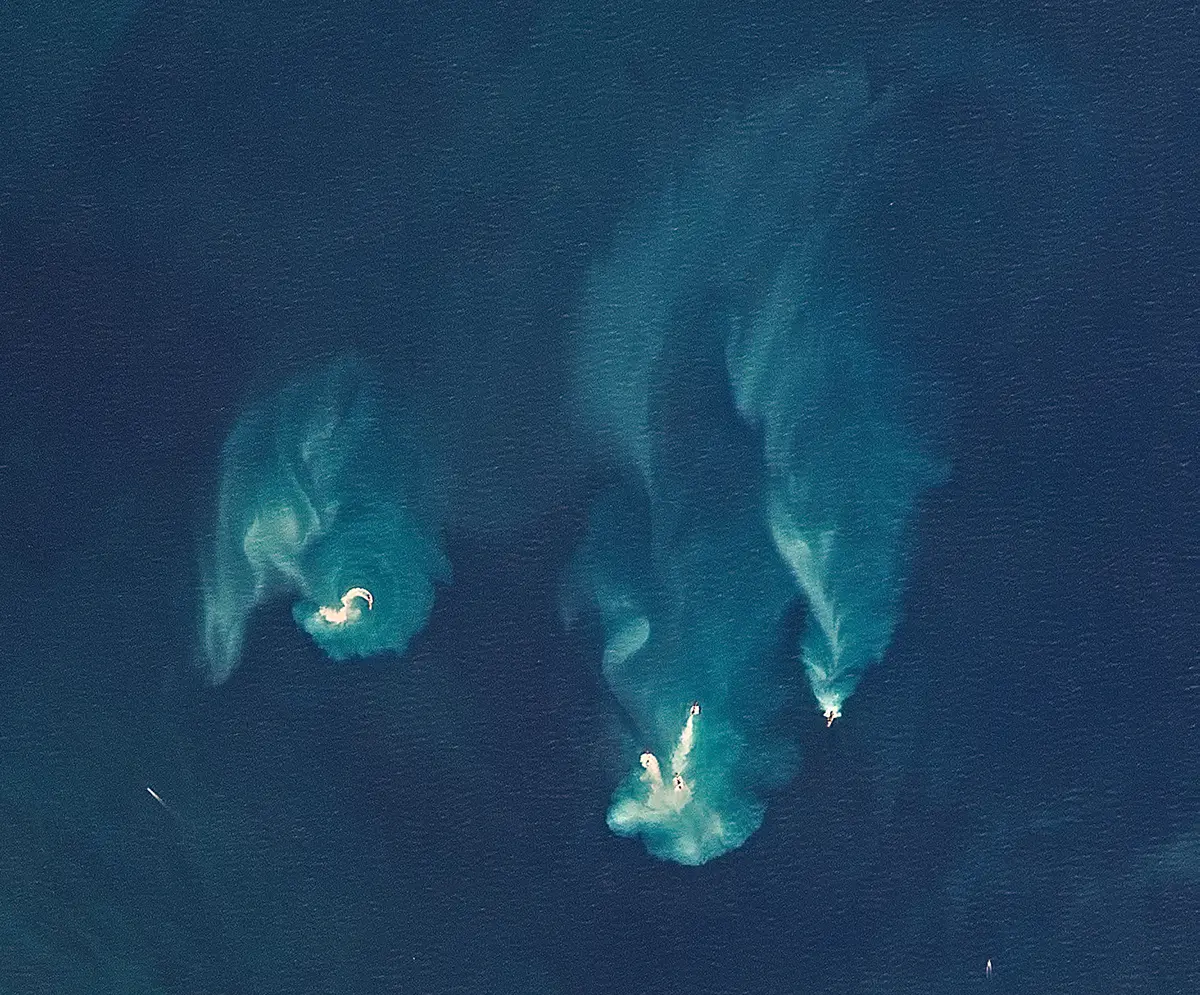
Satellite imagery is also helping our scientists better understand the scale of human activity across the ocean.
Drawing on petabytes of imagery from Planet satellites and the European Space Agency’s Sentinel-2 optical satellite program, our team has detected more than 100 million instances of vessels on the water.
The next step is classification.
Using advanced computer vision techniques, we train models to distinguish different types of vessels and even identify specific ships operating without transmitting their GPS signals. These models draw on approaches similar to those used in facial recognition to identify unique vessel characteristics.
This capability could help shed light on vessels operating without tracking signals, including ships that intentionally disable their transponders. In particular, we believe it could reveal more about the so-called “shadow fleet” of tankers that transport oil while evading traditional monitoring systems.
Supporting global research through a small grants program
Transparency is most powerful when it enables others to act. That’s why last year, we introduced the open ocean research grant program, empowering researchers worldwide to apply Global Fishing Watch datasets to investigate critical ocean challenges.
The first cohort includes researchers from five continents working on issues ranging from protecting whale sharks to analyzing the impacts of industrial fishing on small-scale fisheries.
We expect to see the first research outputs from these projects later this year, followed by an announcement of a second cohort of grantees.
Empowering partners to address ocean challenges
While our policy team works to strengthen fisheries management through transparency, our datasets have applications far beyond fisheries.
We are collaborating with organizations addressing a wide range of ocean issues, spanning whale protection against ship strikes, to helping wind farm developers understand where fishing activity occurs.
Our processing of automatic identification system data is already supporting this work, helping partners better understand patterns of human activity across the ocean.
Updating our core technologies
Behind the scenes, we are also advancing the core technologies that power Global Fishing Watch.
This year, we plan to release major updates to our fishing activity model and vessel classification model — the algorithms that determine vessel types and estimate when fishing vessels are likely engaged in fishing activity based on GPS data. These updated models will be deployed on our public platform and made available to empower governments, partner organizations, researchers, and individuals who want to better understand fishing activity at sea. We are also improving how we manage vessel identity, a critical step to ensure vessel data can be reliably linked across datasets and over time.
Toward a new era of ocean transparency
The ocean belongs to everyone. But managing a shared resource that covers more than two-thirds of the planet requires visibility.
Global Fishing Watch’s 2026 research goals are built on a bold premise: information about the ocean should be common knowledge – and with that knowledge, we can empower decision makers, scientists and communities worldwide to better manage our ocean. Today, with petabytes of satellite imagery, terabytes of GPS data and rapidly advancing AI models, it is possible to observe human activity across the ocean at an unprecedented scale and create the insights needed to fuel this transformation.
David Kroodsma is chief scientist at Global Fishing Watch.