technology

New Fishing Data Paves the Way for Improved Analysis

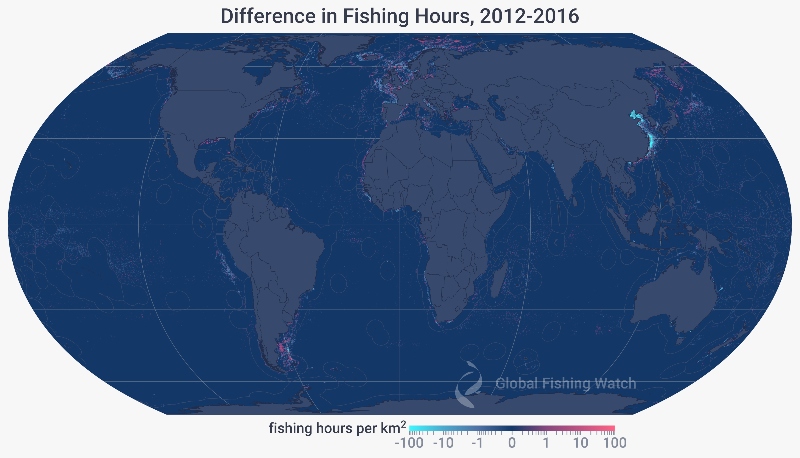
Improvements to our fishing effort data and vessel classification can help promote transparency of human activity on the world’s oceans In 2018, Global Fishing Watch released its first public fishing effort data that included almost 142 million hours of fishing from over 73,000 unique maritime mobile service identity (MMSI) numbers. The dataset, spanning 2012-2016, represented

New Fishing Data Paves the Way for Improved Analysis Read More »
Illegal fishing by dark fleets in north korea

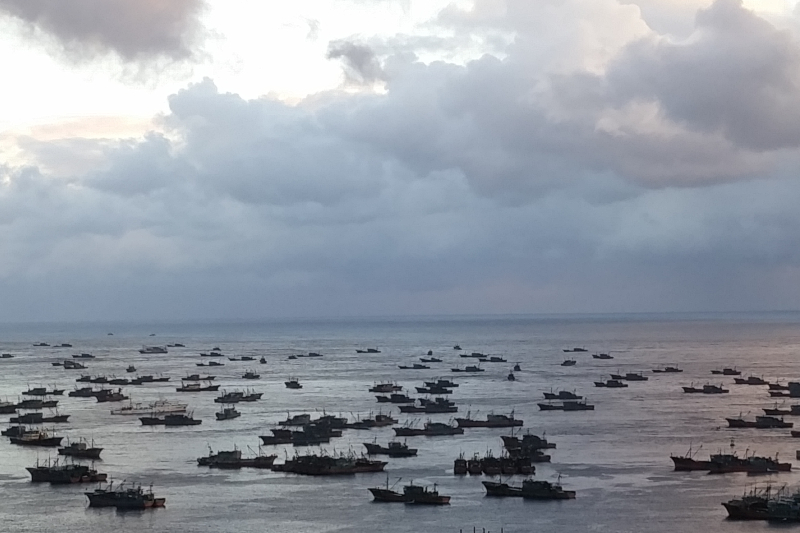
A 2020 Analysis: Detecting the Dark Fleets in North Korea and Russia

Satellite technology reveals decline in illegal fishing activity in North Korean and Russian waters compared to previous years In July 2020, as the COVID-19 pandemic was sweeping across the globe, Global Fishing Watch published a groundbreaking scientific paper revealing one of the largest known cases of illegal fishing. The foreign fishing activity detected across 2017-19 in the Democratic

A 2020 Analysis: Detecting the Dark Fleets in North Korea and Russia Read More »

Tuna transshipment in the Indian Ocean

New Study Unveils Risk of Forced Labor in Fisheries

Researchers leverage satellite data, machine learning, and human rights expertise to develop model that determines risk of forced labor on fishing vessels https://www.youtube.com/watch?v=G5gWgYoR_rU&ab_channel=GlobalFishingWatch In 2016 our research group at the Environmental Market Solutions Lab (emLab) was collaborating with a team of fisheries scientists and economists to better understand the economic rationale behind fishing on the high seas.

New Study Unveils Risk of Forced Labor in Fisheries Read More »

Our Ocean Oslo 2019

2020 Hindsight: How a New Wave of Transparency Can Lead to Better Ocean Governance

Partnership and collective understanding will set the course for Global Fishing Watch’s work ahead And so ends another year—a year that many are perhaps eager to close out. I think it’s fair to say that none of us imagined 2020 would have panned out like this. Twelve months ago we were all preparing for a

2020 Hindsight: How a New Wave of Transparency Can Lead to Better Ocean Governance Read More »

Fishing vessels in coastal Ecuador

Leadership in Fisheries Management Will Help Bring Transparency to Latin American Waters

Costa Rica and Ecuador will join the Global Fishing Watch platform, furthering accountability of fishing activity in the region A new era of transparency in fisheries management is emerging in Latin America. Since 2018, Peru, Chile, and Panama and more recently, Costa Rica and Ecuador, have begun to adapt the orthodox, and not always successful,

Leadership in Fisheries Management Will Help Bring Transparency to Latin American Waters Read More »

Forecast Illegal Fishing Risk in Mexico

Predictive Analytics to Forecast Illegal Fishing Risk in Mexico

A new collaboration aims to make management at sea more cost-effective using cutting-edge technology Illegal, unreported and unregulated (IUU) fishing affects the sustainability of fisheries worldwide. In Mexico, illegal fishing accounts for up to an estimated 56 percent of national seafood production, according to estimates by the Environmental Defense Fund. Such a significant level of IUU

Predictive Analytics to Forecast Illegal Fishing Risk in Mexico Read More »

aerial vessel

New Study Claims Information Sharing is Key to Transparency in International Fisheries

Pacific case study suggests greater transparency will improve legitimacy and sustainability of tuna fisheries  Transshipment, the transfer of catch from fishing vessels to refrigerated cargo vessels (often called ‘reefers’ or ‘carriers’)  is an important part of many seafood supply chains. But when transshipment occurs at sea, loopholes in governance and gaps in monitoring can obscure

New Study Claims Information Sharing is Key to Transparency in International Fisheries Read More »

Satellite ss international space station

Technology collaboration aims to strengthen fisheries monitoring and control

New agreement will combine data and analysis from Global Fishing Watch and Vulcan Inc. to bolster fisheries transparency and enforcement Washington D.C. – Global Fishing Watch (GFW), an international nonprofit organization, has entered into a formal collaboration with Vulcan Inc., combining their vessel monitoring capabilities to enhance fisheries management and governmental efforts to combat illegal, unreported

Technology collaboration aims to strengthen fisheries monitoring and control Read More »

Transshipment Portal Shows Carrier Vessels Loitering in Waters off West Africa

Transshipment Portal Shows Carrier Vessels Loitering in Waters off West Africa

Tracking refrigerated cargo ships, commonly called reefers, can help address illegal fishing in the Gulf of Guinea Transshipment, or the transfer of fish from one vessel to another, is a vital part of the global commercial fishing industry. It touches a wide variety of seafood products, from bigeye and skipjack tuna all the way to

Transshipment Portal Shows Carrier Vessels Loitering in Waters off West Africa Read More »

Palmyra Atoll

Study Uses Satellite Technology to Reveal How Fisheries Respond to Marine Protection

A team of scientists investigate benefits of large marine protected areas Standing at sea level, looking out at the ocean, you can only see about three miles (5 km) from shore. The largest marine protected areas (MPAs), which restrict fishing for conservation or fisheries benefits, span up to 200 nautical miles (370 km) from shore.

Study Uses Satellite Technology to Reveal How Fisheries Respond to Marine Protection Read More »

Mediterranean Sea International Space Station Italy Europe Preview

Spotting Transshipment with an Ocean of AIS Data

Find out how Global Fishing Watch’s carrier vessel portal promotes ocean sustainability by tracking transshipment with the help of AIS data This article was produced and first published by our data partner, Spire Global. Global Fishing Watch created a new tool using Spire Global’s AIS data to shine a light on transshipment—a critical process of high seas

Spotting Transshipment with an Ocean of AIS Data Read More »

Celebrating 25 Years of Collaboration for Responsible Fisheries

Life Below Water: Celebrating 25 Years of Collaboration for Responsible Fisheries

Innovative use of data and technology can support the implementation of historic, flagship policies October 2020 brings the 25th anniversary of the Code of Conduct for Responsible Fisheries (the Code). Developed by the Food and Agriculture Organization of the United Nations (FAO), the Code aims to “strengthen international legal frameworks for more effective conservation, management

Life Below Water: Celebrating 25 Years of Collaboration for Responsible Fisheries Read More »

Asiatic squid vessels

Follow the Lights: Squid Fishing in the Southeast Pacific Ocean

Credit: Simon Ager Satellite technology illuminates foreign and domestic vessels in search of one of Peru’s most valuable catches Asiatic squid vessels are constructed from marine steel, usually weigh between 800-1000 gross tons, and are outfitted with automated jiggers that use up to 150 incandescent lamps to attract squid to the surface. Credit: Simon Ager

Follow the Lights: Squid Fishing in the Southeast Pacific Ocean Read More »

Officer crosschecks suspicious vessel behaviors identified in VMS data in the Marshall Islands

New Partnership Brings Added Opportunities to Fisheries Monitoring

Global Fishing Watch becomes observer to International Monitoring, Control and Surveillance Network  It has been a busy summer for us at Global Fishing Watch. While travel may have been suspended and the majority of fisheries and ocean-related meetings were either canceled or postponed – some held virtually – the work has not slowed down. And

New Partnership Brings Added Opportunities to Fisheries Monitoring Read More »

Capacity for Women in the Maritime Sector

Women in Maritime Africa – South Africa and Global Fishing Watch Establish Program to Build Capacity for Women in the Maritime Sector

New initiative aims to equip women with skills for work in monitoring, control and surveillance Women in Maritime Africa, South Africa chapter (WIMA-SA), and Global Fishing Watch (GFW) have joined forces in a partnership that seeks to develop technical skills for women in the maritime sector. The collaboration will establish a training program specifically designed

Women in Maritime Africa – South Africa and Global Fishing Watch Establish Program to Build Capacity for Women in the Maritime Sector Read More »

Scroll to Top

Help us improve the site

Take a quick website survey to help us build a better experience for visitors like you.