News & Views

New Fishing Data Paves the Way for Improved Analysis

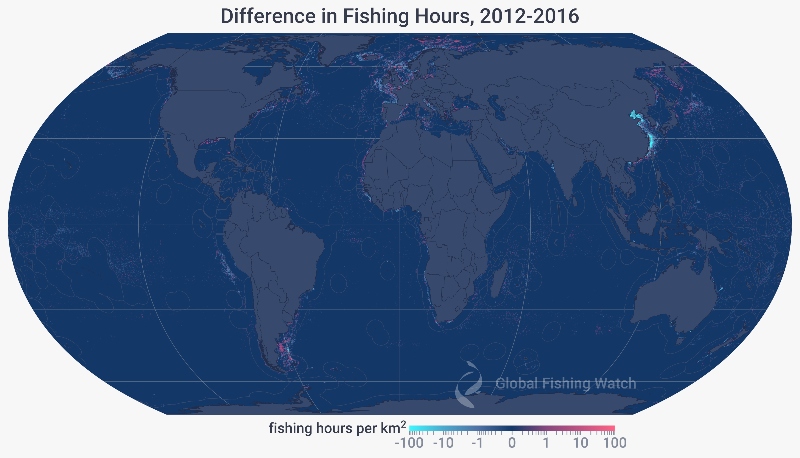
Improvements to our fishing effort data and vessel classification can help promote transparency of human activity on the world’s oceans In 2018, Global Fishing Watch released its first public fishing effort data that included almost 142 million hours of fishing from over 73,000 unique maritime mobile service identity (MMSI) numbers. The dataset, spanning 2012-2016, represented […]

New Fishing Data Paves the Way for Improved Analysis Read More »
COVID-19 Brings Unmatched Downturn in Global Fishing Activity

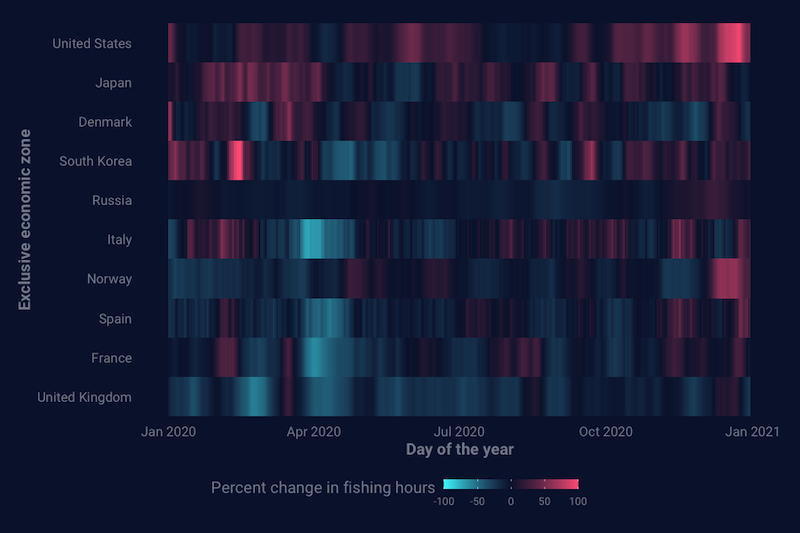
One year into the pandemic that triggered turmoil around the world, an analysis of Global Fishing Watch data sheds light on shifts in global fishing activity  As the world marks the March 11th anniversary of the World Health Organization’s declaration of the COVID-19 pandemic, the fishing sector—like many industries—continues to feel the effects. With our

COVID-19 Brings Unmatched Downturn in Global Fishing Activity Read More »

Costa Rica Boats

Latin America Highlights Transparency as Essential in Tackling Illegal Fishing

Countries embrace transparency-based strategy to promote fair and effective ocean governance The 34th Session of the Food and Agriculture Organization of the United Nations’ Committee on Fisheries (COFI 34) was held virtually last week. Front and center of the agenda was the need to combat illegal, unreported and unregulated (IUU) fishing, a practice which accounts

Latin America Highlights Transparency as Essential in Tackling Illegal Fishing Read More »

Sushi

New poll reveals demand for seafood traceability and public vessel tracking

Oceana calls on U.S. government to reduce illegal, unreported and unregulated fishing in the US seafood supply chain The largest ocean-focused advocacy group, Oceana, released results from a new poll revealing that 83 percent of Americans agree that all seafood should be traceable from the fishing boat to the dinner plate, and 77 percent support

New poll reveals demand for seafood traceability and public vessel tracking Read More »

MUNRO and Kamchatka

Global Fishing Watch Assists U.S. Coast Guard Patrol in the Pacific

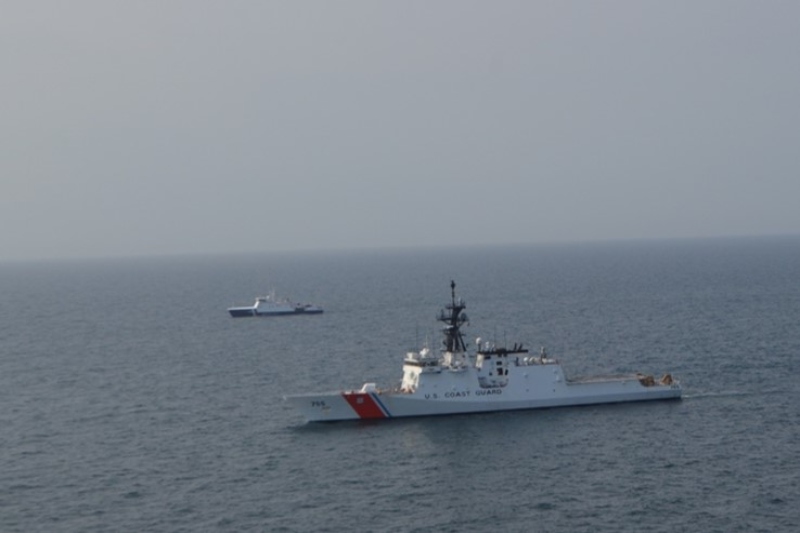
International collaboration and information sharing are key to detecting suspicious vessels and achieving well-managed fisheries. The U.S. Coast Guard (USCG) Cutter DOUGLAS MUNRO recently completed a nearly two-month patrol, traveling 12,500 miles (20,117 km) throughout the ocean in support of Operation North Pacific Guard, an annual high seas fisheries law enforcement operation designed to detect

Global Fishing Watch Assists U.S. Coast Guard Patrol in the Pacific Read More »

Fishing vessels in coastal Ecuador

Leadership in Fisheries Management Will Help Bring Transparency to Latin American Waters

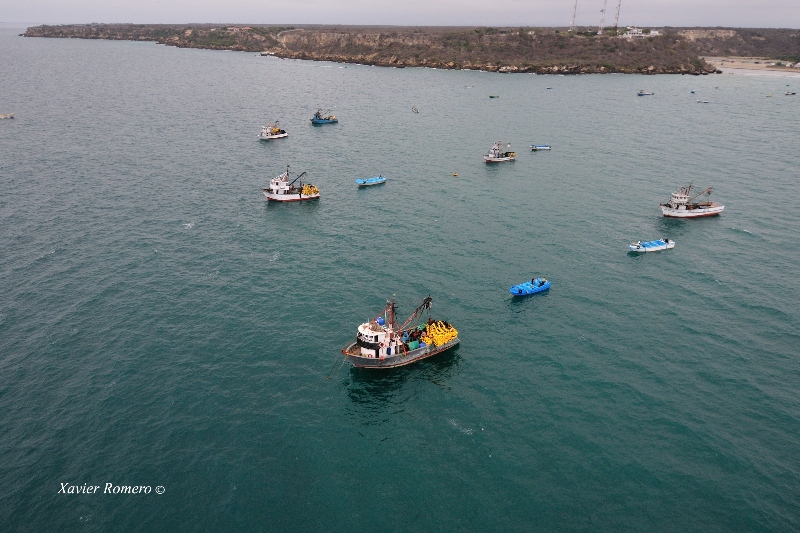
Costa Rica and Ecuador will join the Global Fishing Watch platform, furthering accountability of fishing activity in the region A new era of transparency in fisheries management is emerging in Latin America. Since 2018, Peru, Chile, and Panama and more recently, Costa Rica and Ecuador, have begun to adapt the orthodox, and not always successful,

Leadership in Fisheries Management Will Help Bring Transparency to Latin American Waters Read More »

aerial vessel

New Study Claims Information Sharing is Key to Transparency in International Fisheries

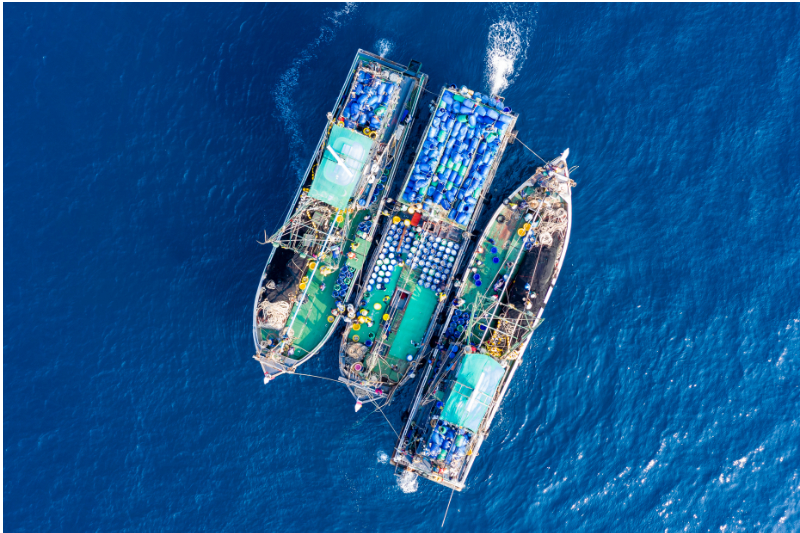
Pacific case study suggests greater transparency will improve legitimacy and sustainability of tuna fisheries  Transshipment, the transfer of catch from fishing vessels to refrigerated cargo vessels (often called ‘reefers’ or ‘carriers’)  is an important part of many seafood supply chains. But when transshipment occurs at sea, loopholes in governance and gaps in monitoring can obscure

New Study Claims Information Sharing is Key to Transparency in International Fisheries Read More »

A scoop is used to haul tons of tuna onto the deck of the purse seine fishing boat

Life Below Water: Ensuring Legal Seafood Starts with Supporting Fisheries Workers

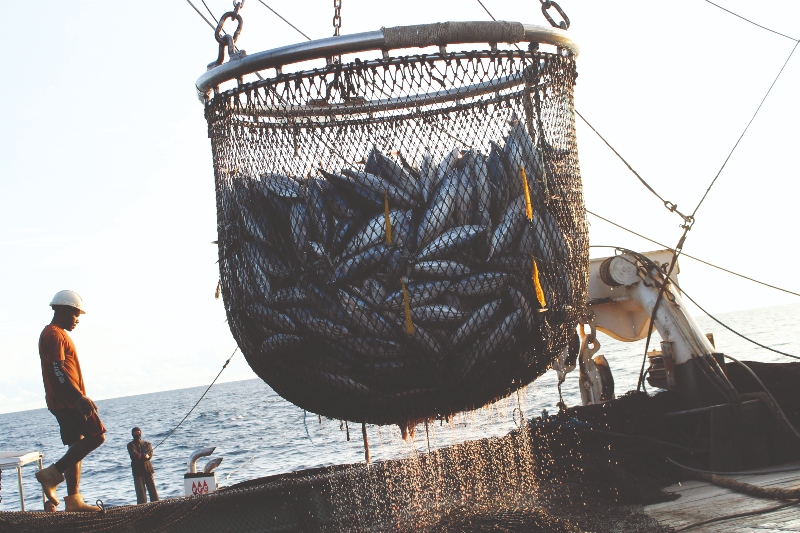
Transparency of vessel information will protect fisheries observers and help create a culture of compliance Working as a fisheries observer is a challenging job. Days, possibly even weeks away from shore, long hours in a tough environment – there’s no question that the role is physically and mentally demanding.  But the difficulties don’t stop there.

Life Below Water: Ensuring Legal Seafood Starts with Supporting Fisheries Workers Read More »

Satellite ss international space station

Technology collaboration aims to strengthen fisheries monitoring and control

New agreement will combine data and analysis from Global Fishing Watch and Vulcan Inc. to bolster fisheries transparency and enforcement Washington D.C. – Global Fishing Watch (GFW), an international nonprofit organization, has entered into a formal collaboration with Vulcan Inc., combining their vessel monitoring capabilities to enhance fisheries management and governmental efforts to combat illegal, unreported

Technology collaboration aims to strengthen fisheries monitoring and control Read More »

Transshipment Portal Shows Carrier Vessels Loitering in Waters off West Africa

Transshipment Portal Shows Carrier Vessels Loitering in Waters off West Africa

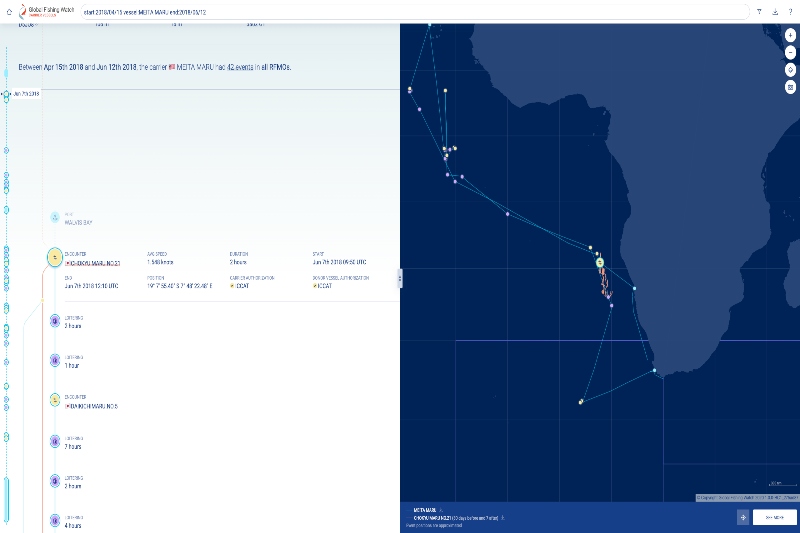
Tracking refrigerated cargo ships, commonly called reefers, can help address illegal fishing in the Gulf of Guinea Transshipment, or the transfer of fish from one vessel to another, is a vital part of the global commercial fishing industry. It touches a wide variety of seafood products, from bigeye and skipjack tuna all the way to

Transshipment Portal Shows Carrier Vessels Loitering in Waters off West Africa Read More »

Palmyra Atoll

Study Uses Satellite Technology to Reveal How Fisheries Respond to Marine Protection

A team of scientists investigate benefits of large marine protected areas Standing at sea level, looking out at the ocean, you can only see about three miles (5 km) from shore. The largest marine protected areas (MPAs), which restrict fishing for conservation or fisheries benefits, span up to 200 nautical miles (370 km) from shore.

Study Uses Satellite Technology to Reveal How Fisheries Respond to Marine Protection Read More »

Mediterranean Sea International Space Station Italy Europe Preview

Spotting Transshipment with an Ocean of AIS Data

Find out how Global Fishing Watch’s carrier vessel portal promotes ocean sustainability by tracking transshipment with the help of AIS data This article was produced and first published by our data partner, Spire Global. Global Fishing Watch created a new tool using Spire Global’s AIS data to shine a light on transshipment—a critical process of high seas

Spotting Transshipment with an Ocean of AIS Data Read More »

Celebrating 25 Years of Collaboration for Responsible Fisheries

Life Below Water: Celebrating 25 Years of Collaboration for Responsible Fisheries

Innovative use of data and technology can support the implementation of historic, flagship policies October 2020 brings the 25th anniversary of the Code of Conduct for Responsible Fisheries (the Code). Developed by the Food and Agriculture Organization of the United Nations (FAO), the Code aims to “strengthen international legal frameworks for more effective conservation, management

Life Below Water: Celebrating 25 Years of Collaboration for Responsible Fisheries Read More »

Daily total landed fishing hours for japanese domestic vessels graphic

COVID-19 Harms Japanese Fisheries Despite Active Fleet

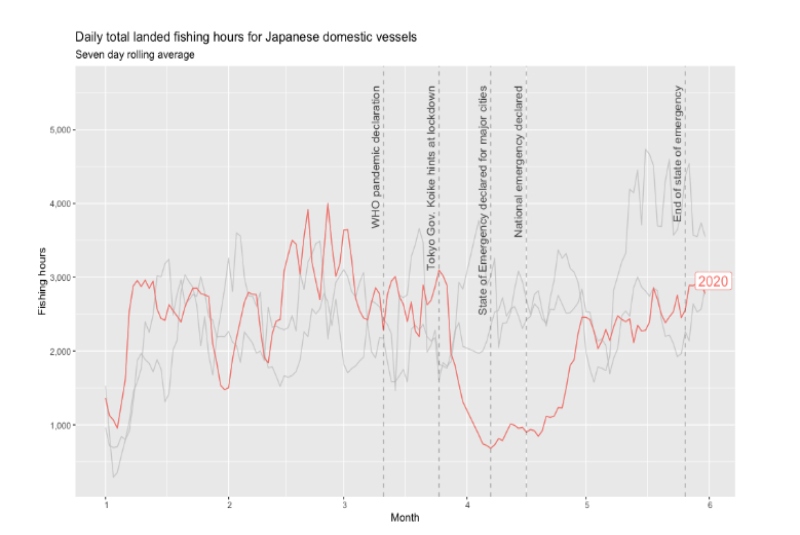
A second wave of the coronavirus could exacerbate future fisheries damages Global fishing activity has been in decline since the COVID-19 pandemic began. From the start of 2020 fishing activity has decreased by approximately 6.6 percent, and it has dropped nearly 7.9 percent since the World Health Organization declared a global pandemic on March 11.

COVID-19 Harms Japanese Fisheries Despite Active Fleet Read More »

Scroll to Top