ⓒ Ben Dilley
The Issue
Identifying illegal fishing with satellite technology or optical imagery is one thing. But catching it at sea — and making the charges stick in court — is an entirely different battle. Fisheries authorities must have clear procedures for inspection planning, seamless coordination between institutional bodies and rigorous field protocols for potential violations in order to successfully clamp down on bad actors.
In Panama’s vast marine territory, fisheries monitoring, control and surveillance (MCS) activities fall to three primary bodies: the Aquatic Resources Authority of Panama (ARAP), the Ministry of Environment (MiAmbiente) and the National Aeronaval Service (SENAN). But despite their shared mission to safeguard the country’s marine ecosystems and resources, these agencies historically operated without standardized inspection protocols to guide fisheries inspections both inside and outside marine protected areas.
This gap created a major bottleneck. Even when high-tech satellite tracking could help flag suspicious activity in Panamanian waters, authorities lacked a playbook to inspect vessels, document infractions and gather court-ready evidence. Without clear, shared procedures, data and information often fell short of supporting targeted enforcement and legal proceedings.
Panamanian authorities recognized this and took the necessary measures to change it. In 2025, they established an inspection-planning framework through a National Control and Inspection Plan and committed to the development of operational guidelines aimed at translating that framework into consistent action in the field.
Our Work
To turn high-tech tracking into real-world accountability, Global Fishing Watch supported the Panamanian government in building an operational playbook tailored to the mandates of each relevant agency. Together, the partnership developed a comprehensive fisheries inspection manual alongside tailored operational guides.
Both the manual and guides establish a common methodology for fisheries inspections while allowing each institution to apply procedures in accordance with its specific responsibilities. The procedures within the manual are designed to target every stage of an enforcement operation: standardizing field procedures, raising the quality of chain-of-custody evidence, facilitating seamless administrative follow-up when potential violations are identified, and strengthening coordination across ARAP, MiAmbiente and SENAN.
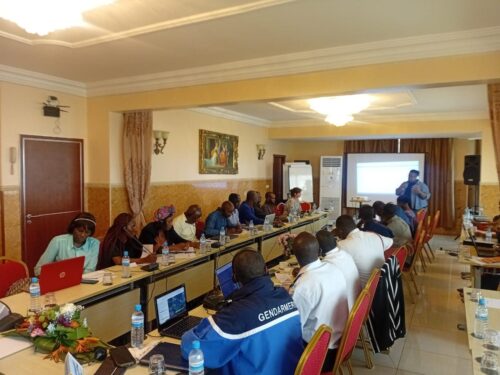
In September 2026, Global Fishing Watch led an intensive capacity-development workshop that brought together 45 officials from all three agencies. Technical experts, legal teams and frontline operational staff participated in a hands-on forum for cross-agency alignment. Officials went beyond just learning the new protocols – they actively collaborated to map out concrete communication channels and joint operational strategies before, during and after patrol missions.
The joint work between Global Fishing Watch and the Panamanian government demonstrates how technology can provide authorities with valuable insights as long as operational systems and institutional processes are in place to support them in taking action.
Today, Panama is turning this collaborative momentum into lasting institutional legacy. ARAP has confirmed that the new fisheries inspection manual will be formally adopted through an administrative resolution, helping embed the procedures within the agency’s enforcement framework. And participating agencies have also expressed strong interest in formally incorporating the new guides into mandatory training curricula, ensuring the protocols become a permanent component of induction for future inspectors, park rangers, monitoring operators and other personnel involved in enforcement activities.
By helping Panama establish standardized inspection procedures and root them deeply across its institutions, Global Fishing Watch is supporting a shift toward a more coordinated and intelligence-informed approach to fisheries enforcement — one that connects technology and data with the operational and institutional processes needed to turn information into action.