ⓒ Ben Dilley
The Issue
Across Southeast Asia, illegal, unreported and unregulated fishing (IUU) poses a relentless threat to marine ecosystems and regional fisheries governance. In the Philippines, where the fisheries sector supports 1.6 million livelihoods and contributes an estimated 1.3 percent to the country’s gross domestic product, the crisis is intensifying. According to Oceana, nighttime satellite detections of suspected illegal fishing jumped 9 percent between 2022 and 2023, followed by an additional 10.5 percent surge through 2024.
Leading the fight against this illegal activity is the Bureau of Fisheries and Aquatic Resources of the Philippines (BFAR), the agency tasked with safeguarding the nation’s 850,000 square mile (2.2 million square kilometers) exclusive economic zone. While BFAR has access to growing volumes of maritime domain awareness data, transforming that information into actionable fisheries intelligence remains a major bottleneck. To meet this challenge, BFAR has prioritized strengthening its analytical and reporting capabilities across regional and central offices.
Our Work
To help build this capacity, Philippine authorities sought support from Global Fishing Watch through the Joint Analytical Cell, or JAC — a collaboration among mission-driven organizations that provides maritime authorities with fisheries intelligence, data analysis and capacity development to help combat illegal fishing.
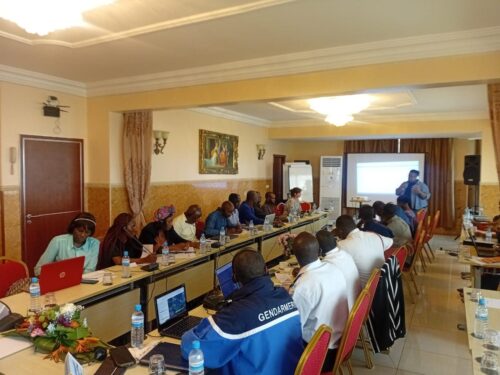
In February 2026, Global Fishing Watch joined other JAC members, as well as BFAR, to hold a targeted capacity building workshop in Muñoz, Nueva Ecija. Supported by the Department of Fisheries and Oceans Canada, 24 analysts from BFAR’s monitoring centers gathered to mark the Indo-Pacific region’s first deployment of the JAC’s monitoring, control and surveillance curriculum.
The three-day workshop moved beyond instruction, with Global Fishing Watch staff immersing participants in hands-on, scenario-based intelligence work through the organization’s flagship map. Analysts learned to interpret complex data layers, execute pre-patrol analyses, pin down vessels of interest and compile intelligence reports.
The impact was immediate. During the final practical exercise, one participant applied the newly acquired analytical techniques to identify potential noncompliance by a Philippine purse seiner operating outside its authorized area, proving the real-world power of technology in detecting suspicious behavior.
The initiative also established a sustainable foundation for long-term growth and scalability. The workshop identified a core group of BFAR practitioners equipped to train new colleagues across regional offices, supported by remote coaching and standardized templates for conducting analyses.
The collaboration is set to expand beyond national waters, as BFAR and the JAC leverage this framework to engage regional partners, including Papua New Guinea and Palau, extending fisheries intelligence and cooperative governance across the Pacific.