ⓒ Ben Dilley
The Issue
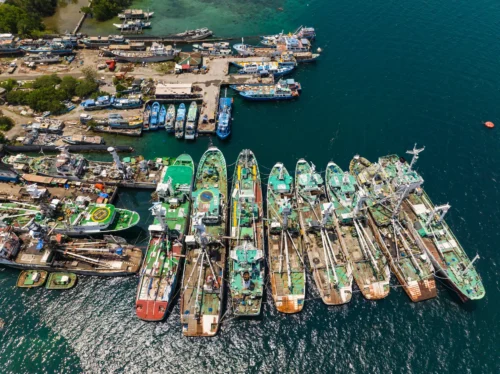
A vessel can cross the ocean, change flags and pass through the hands of multiple companies before its true owner is identified. In global industrial fishing, ownership structures often span multiple jurisdictions and layers of corporate entities. This makes it difficult — even for authorities with every intention to act — to link a vessel to the individuals who ultimately profit from its activity.
Ultimate beneficial ownership (UBO) data can help close that gap. Knowing who stands behind a vessel strengthens fisheries management, provides licensing authorities with a clearer basis for due diligence and helps verify the origin of fish moving through global supply chains. It is a critical piece of data that regulators in other sectors, from banking to mining, have long required as standard practice — but it is yet to be standardized in the fishing industry.
Panama, whose flag flies over hundreds of vessels worldwide, has made sustained efforts to strengthen transparency and control over its fishing fleet. Following “yellow cards” from the European Union in 2012 and 2019 for deficiencies in fleet monitoring, the country corrected its course. In 2019, Panama took one of its most visible steps by sharing its international fleet’s tracking data with the world through the Global Fishing Watch map, becoming one of the first nations to do so. Incorporating beneficial ownership information was the next step in that process.
Our Work
In 2025, Panama announced at the Our Ocean Conference in Busan, South Korea, its intention to strengthen the collection of beneficial ownership information for its entire international fishing fleet and move toward making it publicly accessible.
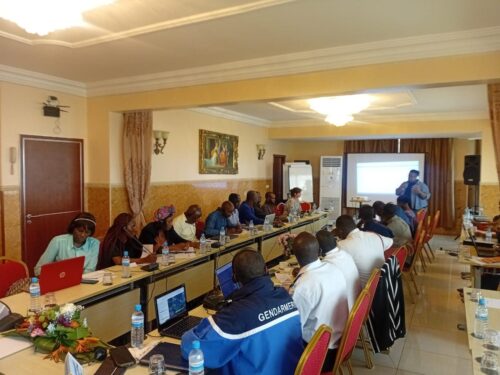
Global Fishing Watch worked alongside the Aquatic Resources Authority of Panama (ARAP) to navigate this path, helping identify the legal, technical and institutional steps required to turn that commitment into reality.
The joint effort combined technical support from Global Fishing Watch with leadership from Panamanian authorities in implementing the new measures. As part of this process, authorities engaged in discussions with the legal representatives of the vessels’ true owners to clarify that providing this information was not a new burden, but an obligation already established under the country’s existing regulations.
The landmark move came in June 2026. Just ahead of the 11th Our Ocean Conference in Mombasa, Kenya, ARAP shattered decades of maritime anonymity by publishing the UBO data of dozens of vessels in its international fleet. While some data points have yet to be published on Panama’s official website, the foundation of the registry is now built — an unstoppable precedent for the future of fisheries governance — and the work continues.
Panama is harnessing this momentum to drive the next phase of reform. Rather than letting transparency be an afterthought, ARAP has already adopted an administrative resolution codifying beneficial ownership directly into the vessel preregistration process. By ensuring transparency is required from day one, Panama is cementing its recent milestones: the country’s 2021 fisheries law, which created an ecosystem of policies and regulations grounded in scientific knowledge, the full digitization of license and sanction registries, and the June 2026 publication of tracking data for nearly 200 vessels from Panama’s domestic fleet on the Global Fishing Watch map.