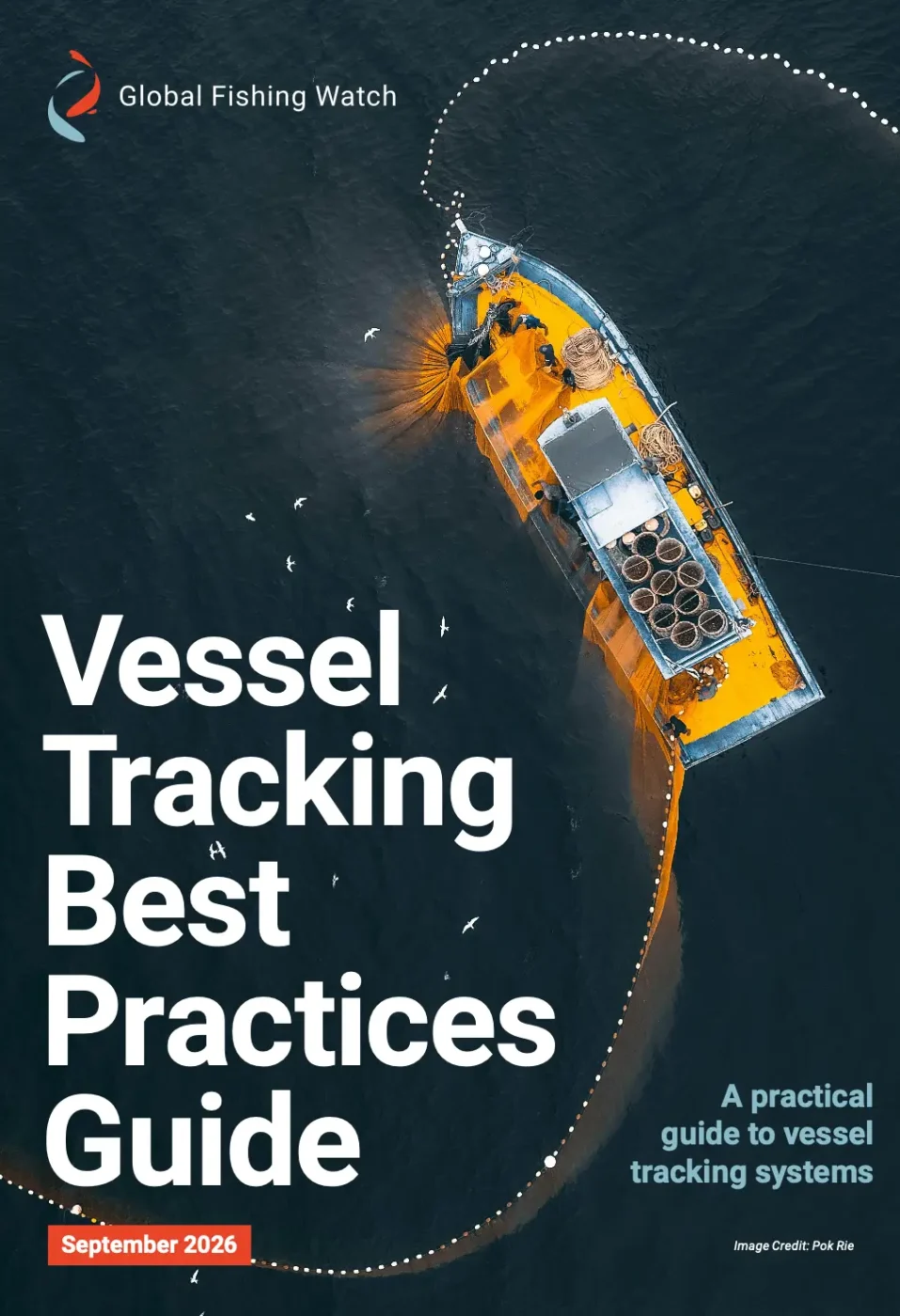
Guide de bonnes pratiques pour le suivi des navires
Guide de bonnes pratiques pour le suivi des navires
- Published
A practical new framework offers governments a cost-effective roadmap to improve vessel tracking systems, secure their waters and protect fisheries.
The ocean is our planet’s greatest shared commons, yet as industrial pressures and illegal activities mount, what happens at sea remains dangerously opaque. Although vessel tracking technology has existed for decades, the lack of a unified global standard has created a fragmented regulatory landscape. This uneven approach leaves vast areas of the ocean largely unmonitored and vulnerable to illegal, unreported and unregulated (IUU) fishing.
To address this critical governance gap, Global Fishing Watch developed the Vessel Tracking Best Practices Guide. Drawing on decades of global operational expertise and the analysis of tracking data from over 120,000 vessels, this commercially neutral resource provides a comprehensive roadmap for decision-makers. It guides governments through the entire lifecycle of a tracking system — from defining its core purpose and building the technical architecture that makes data trustworthy, to establishing the financial and legal scaffolding that bolsters enforceability.
A foundational principle of the guide is integration. By treating vessel monitoring systems (VMS) and automatic identification systems (AIS) as complementary tools, authorities can cross-validate data and close critical monitoring blind spots. Governments can also use high-frequency data polling and robust transparency mechanisms to ensure their tracking infrastructure does more than collect data and actively support effective management, accountability and regional cooperation.
To succeed in the real world, States must treat vessel tracking as a comprehensive governance system rather than a standalone technology. By adopting these standards, States will be better positioned to protect marine resources, meet international obligations, attract responsible investment, strengthen maritime governance and deliver long-term benefits for the ocean and the people who depend on it.